LIVE DISPATCH
Loss and Damage Finance: From COP28 Pledges to Policy Architecture Extended Deterrence Under Strain: Credibility, Assurance, and the Stability-Instability Paradox in the Indo-Pacific Beyond Consultation: BIMSTEC's Emerging Role in Regional Intelligence and Security Cooperation Maritime India: Security, Trade, and Great Power Competition Between the Desert and the Savannah: Conflict and the Political Economy of Instability in the Sahel Beyond Ukraine: Understanding Putin's Vision of Russian Power The Politics of Ali Khamenei's Funeral Silicon Sovereignty: How Semiconductors Are Redrawing Global Power Hierarchies Operation Sindoor and the Changing Dynamics of India–Pakistan Security The Negative Impact of US–Iran War on the Pacific Region Generative AI, Labour Sovereignty, and the Geoeconomics of India's Service Economy BRICS Expansion and the Multipolar Moment: Opportunity or Strategic Contradiction? India's AI Diplomacy and the Future of Strategic Technologies Foot-Dragging as Feminism: Iran, South Korea, and the Ungovernable Body Lethal Autonomous Weapons Systems and the Governance Deficit: Challenges to International Humanitarian Law and Accountability Beyond Proximity: Why the UAE Occupies a Growing Place in Iran’s Strategic Calculus Great Power Rivalry and the Crisis of the United Nations Why Fiji Matters: The New Geopolitics of the Indo-Pacific Islands Ten Years After Brexit: Regret, Reform, or Reversal? The Long Shadow of 1953: Understanding the Iran–US Conflict Sports, Strategy and Statecraft of Mega Sporting Events as Geoeconomic Instruments: Qatar 2022 to Saudi Arabia 2034 Border Fencing and National security: India’s Strategy along the Bangladesh Border Hardening the Quad: From Strategic Dialogue to Operational Cooperation Lingering Effects of the Bush Doctrine on Contemporary US Foreign Policy The Maghreb of States: Identity, Sovereignty, and the Limits of Non-Interference India’s BRICS 2026 Chairmanship Navigating a tightrope Amidst the Chinese Geopolitical Rise Beyond the Battlefield: Understanding Unconventional Security Challenges in Contemporary Geopolitics The Control Paradox: How Proxy Warfare Enables Strategic Deniability While Constraining Strategic Control Trapped in Deterrence: Nuclear Stability and the Persistence of Conflict in South Asia The Return of Unipolarity? U.S Strategic Primacy and the Future of the Global Order Supply Chains and Complicity: The Role of Global Corporations in Forced Labour in Xinjiang The Distant Threat: Is Israel Constructing a Strategic Rival in Pakistan Island Militarisation and Techno-Diplomacy: Turkey’s Eastern Mediterranean Fault Lines Amid India-Greece Alignment India’s Security Scenario: An Assessment of its Continental and Maritime Challenges The Geopolitical Architecture of European Defence: Navigating NATO Synergies, Transatlantic Retrenchment, and the Hybrid Threat Landscape The Artemis Accords and the Future of Global Space Governance AI and the Securitization of Critical Infrastructure: Implications of India's AI Summit Beyond Rhetoric: Evaluating the Effectiveness of International Sanctions on China’s Treatment of Uyghur Muslims The Emerging Maritime Rivalry in the Western Indian Ocean: India’s Response to Extra-Regional Powers India's Maritime Grand Strategy on Trial : The IRIS Dena Incident and the Indian Ocean Question Loss and Damage Finance: From COP28 Pledges to Policy Architecture Extended Deterrence Under Strain: Credibility, Assurance, and the Stability-Instability Paradox in the Indo-Pacific Beyond Consultation: BIMSTEC's Emerging Role in Regional Intelligence and Security Cooperation Maritime India: Security, Trade, and Great Power Competition Between the Desert and the Savannah: Conflict and the Political Economy of Instability in the Sahel Beyond Ukraine: Understanding Putin's Vision of Russian Power The Politics of Ali Khamenei's Funeral Silicon Sovereignty: How Semiconductors Are Redrawing Global Power Hierarchies Operation Sindoor and the Changing Dynamics of India–Pakistan Security The Negative Impact of US–Iran War on the Pacific Region Generative AI, Labour Sovereignty, and the Geoeconomics of India's Service Economy BRICS Expansion and the Multipolar Moment: Opportunity or Strategic Contradiction? India's AI Diplomacy and the Future of Strategic Technologies Foot-Dragging as Feminism: Iran, South Korea, and the Ungovernable Body Lethal Autonomous Weapons Systems and the Governance Deficit: Challenges to International Humanitarian Law and Accountability Beyond Proximity: Why the UAE Occupies a Growing Place in Iran’s Strategic Calculus Great Power Rivalry and the Crisis of the United Nations Why Fiji Matters: The New Geopolitics of the Indo-Pacific Islands Ten Years After Brexit: Regret, Reform, or Reversal? The Long Shadow of 1953: Understanding the Iran–US Conflict Sports, Strategy and Statecraft of Mega Sporting Events as Geoeconomic Instruments: Qatar 2022 to Saudi Arabia 2034 Border Fencing and National security: India’s Strategy along the Bangladesh Border Hardening the Quad: From Strategic Dialogue to Operational Cooperation Lingering Effects of the Bush Doctrine on Contemporary US Foreign Policy The Maghreb of States: Identity, Sovereignty, and the Limits of Non-Interference India’s BRICS 2026 Chairmanship Navigating a tightrope Amidst the Chinese Geopolitical Rise Beyond the Battlefield: Understanding Unconventional Security Challenges in Contemporary Geopolitics The Control Paradox: How Proxy Warfare Enables Strategic Deniability While Constraining Strategic Control Trapped in Deterrence: Nuclear Stability and the Persistence of Conflict in South Asia The Return of Unipolarity? U.S Strategic Primacy and the Future of the Global Order Supply Chains and Complicity: The Role of Global Corporations in Forced Labour in Xinjiang The Distant Threat: Is Israel Constructing a Strategic Rival in Pakistan Island Militarisation and Techno-Diplomacy: Turkey’s Eastern Mediterranean Fault Lines Amid India-Greece Alignment India’s Security Scenario: An Assessment of its Continental and Maritime Challenges The Geopolitical Architecture of European Defence: Navigating NATO Synergies, Transatlantic Retrenchment, and the Hybrid Threat Landscape The Artemis Accords and the Future of Global Space Governance AI and the Securitization of Critical Infrastructure: Implications of India's AI Summit Beyond Rhetoric: Evaluating the Effectiveness of International Sanctions on China’s Treatment of Uyghur Muslims The Emerging Maritime Rivalry in the Western Indian Ocean: India’s Response to Extra-Regional Powers India's Maritime Grand Strategy on Trial : The IRIS Dena Incident and the Indian Ocean Question
ADVERTISEMENT
Politics November 8, 2021 2491 Reads

US policy towards Southeast Asia, and India’s proactive approach
P
By Pankaj Jha
Author • Centre for Security & Strategic Studies
US policy towards Southeast Asia, and India’s proactive approach
Share Analysis:
EXECUTIVE SUMMARY & STRATEGIC TAKEAWAYS

Under the Interim National Security Strategic Guidance document released by Whitehouse in April 2021 there are few priority areas which have been highlighted. There are five major pillars: ‘rising nationalism, challenges to democracy, US gr...

ADVERTISEMENT

The Biden administration has been focusing on health, education, and knowledge sharing. The document highlighted the focus on promoting resilience, innovation, prosperity, and fair competitiveness. Instead of US unilaterally changing the status quo or any aggression it has sought for collective action in fields such as cyber and digital threats, countering pandemics and preventive medicine research, addressing challenges related to climate change, international economic disturbances, prolonged humanitarian crises, rise of new violent (religious word was purposefully omitted) extremism and terrorism, and the proliferation of nuclear weapons and WMD.

However, in this rather defensive stance there are looming threats such as Taiwan factor, South China Sea and East China Sea, and ongoing India- China border tensions. Biden administration acknowledges that China has rapidly become more assertive. China’s comprehensive power is magnified through exposition of diplomatic, military, economic, and technological influence to challenge the established global governance norms. US has buttressed that it would be proactive in protecting alliances, institutions, agreements, and norms underwriting the international order. For Biden administration the advances in clean energy technologies, participation in COVAX programme, addressing climate change effects; research in biotechnology for therapeutics; and undertaking collaboration in telecommunications (5G) infrastructure including D-10 architecture promoted by Britain.

One of the major tectonic changes was the signing of the AUKUS alliance of the three nations Australia, UK, and Us. The major aim is to involve Britain in East of Suez and keep the Hong Kong issue burning. It is also meant to spur the UK defence industry. Within NATO there are differences, and which have come out in the open with France lamenting the creation of new AUKUS. Further US might again be facing dissonance within Philippine’s politics as US-Philippines Visiting Forces Agreement is still under extension and the International Criminal Court taking up the case of extrajudicial killings under President Duterte.

For Biden administration within Southeast Asia the problems related to return to democracy in Myanmar and Thailand. Biden is increasingly seen as a weak President with its withdrawal from Afghanistan and his popularity has plummeted. Biden will be bidding time. The US economic recession will be the biggest challenge and it would seek markets and areas to invest. The middle powers such as Vietnam, Australia, Korea, and Indonesia would be most benefitted- both in terms of trade and investment.

Given the fact that under President Joe Biden ties with India are congenial, and India’s approach would be based on few critical pillars under Act East policy. India raised the issue of maritime security. India conducted UNSC special dialogue on the issue in which Vietnamese president made few constructive suggestions. India is interested in promoting both digital and physical connectivity.

The change in Act East Policy is that there is more outcome perspective on India-ASEAN Action Plan 2021-2025. And there is concerted approach towards Quick Completion Projects in CLV countries. Defence and military engagements would intensify-India is looking for production and fabrication facility and entering into logistics support agreement with select Southeast Asian countries including Vietnam.

India will be more proactive in South China Sea including group sails and undertaking exercises. For India AUKUS means reinforcement of democratic liberal order. However, it is also felt that there are two possible trilaterals which might germinate on the side-lines including India, France and Vietnam, as well as India, Japan and Vietnam.

India would work on engaging Southeast Asian countries through specific projects related to digital and physical infrastructure. India is considering participating in the Building Back a Better World(B3W) Initiative by G-7 Countries. India’s Indo-Pacific oceans Initiative-Seven pillars including technology, knowledge, and education might synergize with ASEAN outlook towards Indo-Pacific which builds on security and cooperation. India’s SAGARMALA (Garland in the Ocean) programme might extend to Southeast Asia connecting nodes of ports. This would reduce logistics costs and help in creating an eco-system of trade, investments, ancillary industries, supporting ports and export processing zones.

India’s ‘double fishhook strategy’ to counter string of pearls strategy is also gradually taking shape. This can be seen form infrastructure initiatives in small island countries and India’s approach to seek docking and berthing rights.

India is not a member of RCEP but is looking for bilateral agreements with select countries and even investment agreements with Australia and New Zealand and reviewing the ASEAN -India Free Trade Agreement. India- Australia have already expressed to sign the FTA in 2022 and this will pave the way for a similar agreement with New Zealand.

India would be working with other Quad countries on critical technologies especially Quantum computing and underwater systems. Pilot projects related to it are already in the pipeline and would see much work being done without media scrutiny.

India’s Act East Policy would reach new milestones given the fact that ASEAN is also working on political and economic communities and for that maritime security and maintaining peace and security would be critical in the region.


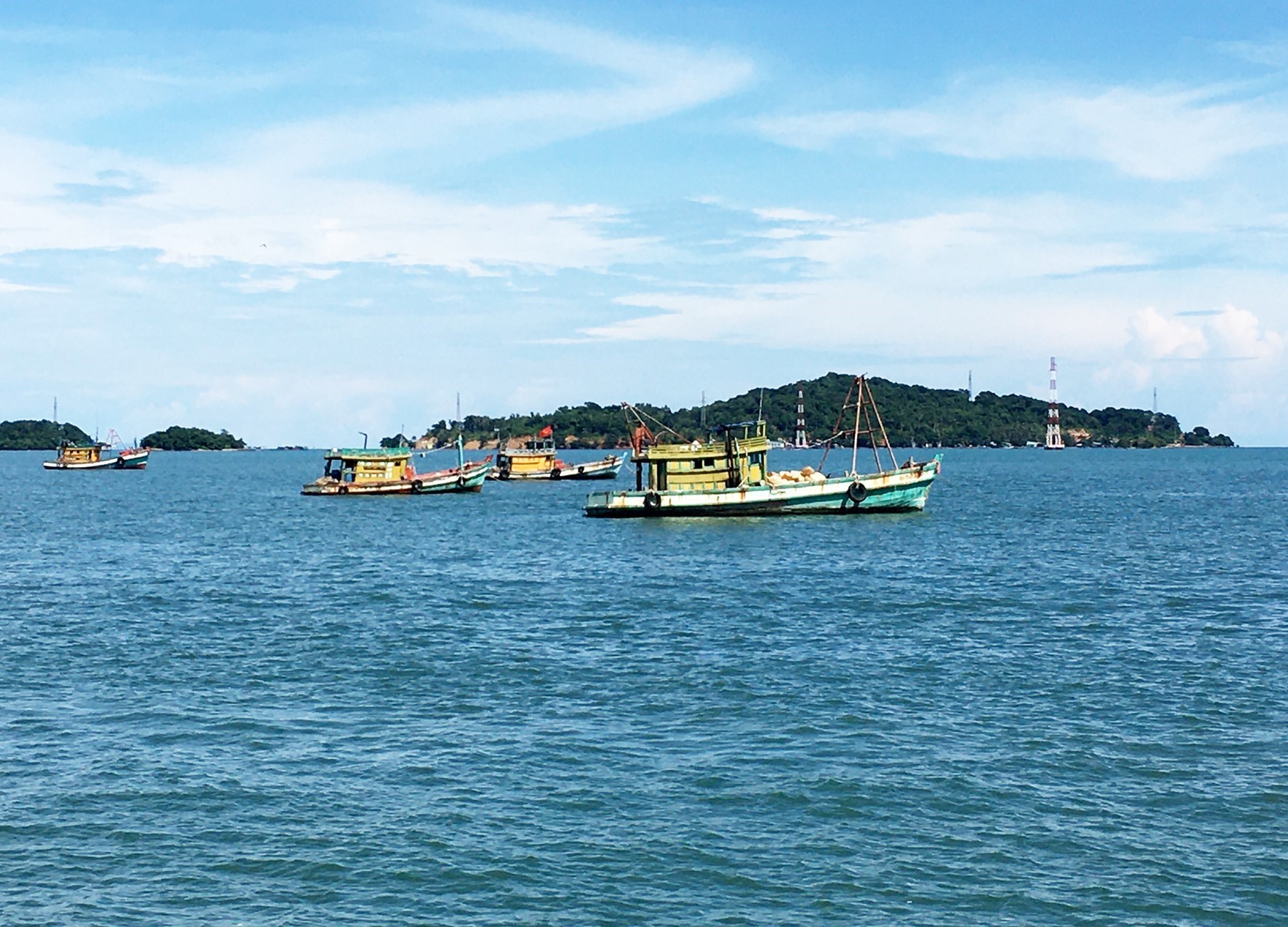
Pic Courtesy-Vietnam News Agency

(the views expressed are those of the author and do not represent views of CESCUBE.)


P
About Pankaj Jha →

Senior Research Fellow at Centre for Security & Strategic Studies.
ADVERTISEMENT

Related Strategic Analysis