LIVE DISPATCH
Loss and Damage Finance: From COP28 Pledges to Policy Architecture Extended Deterrence Under Strain: Credibility, Assurance, and the Stability-Instability Paradox in the Indo-Pacific Beyond Consultation: BIMSTEC's Emerging Role in Regional Intelligence and Security Cooperation Maritime India: Security, Trade, and Great Power Competition Between the Desert and the Savannah: Conflict and the Political Economy of Instability in the Sahel Beyond Ukraine: Understanding Putin's Vision of Russian Power The Politics of Ali Khamenei's Funeral Silicon Sovereignty: How Semiconductors Are Redrawing Global Power Hierarchies Operation Sindoor and the Changing Dynamics of India–Pakistan Security The Negative Impact of US–Iran War on the Pacific Region Generative AI, Labour Sovereignty, and the Geoeconomics of India's Service Economy BRICS Expansion and the Multipolar Moment: Opportunity or Strategic Contradiction? India's AI Diplomacy and the Future of Strategic Technologies Foot-Dragging as Feminism: Iran, South Korea, and the Ungovernable Body Lethal Autonomous Weapons Systems and the Governance Deficit: Challenges to International Humanitarian Law and Accountability Beyond Proximity: Why the UAE Occupies a Growing Place in Iran’s Strategic Calculus Great Power Rivalry and the Crisis of the United Nations Why Fiji Matters: The New Geopolitics of the Indo-Pacific Islands Ten Years After Brexit: Regret, Reform, or Reversal? The Long Shadow of 1953: Understanding the Iran–US Conflict Sports, Strategy and Statecraft of Mega Sporting Events as Geoeconomic Instruments: Qatar 2022 to Saudi Arabia 2034 Border Fencing and National security: India’s Strategy along the Bangladesh Border Hardening the Quad: From Strategic Dialogue to Operational Cooperation Lingering Effects of the Bush Doctrine on Contemporary US Foreign Policy The Maghreb of States: Identity, Sovereignty, and the Limits of Non-Interference India’s BRICS 2026 Chairmanship Navigating a tightrope Amidst the Chinese Geopolitical Rise Beyond the Battlefield: Understanding Unconventional Security Challenges in Contemporary Geopolitics The Control Paradox: How Proxy Warfare Enables Strategic Deniability While Constraining Strategic Control Trapped in Deterrence: Nuclear Stability and the Persistence of Conflict in South Asia The Return of Unipolarity? U.S Strategic Primacy and the Future of the Global Order Supply Chains and Complicity: The Role of Global Corporations in Forced Labour in Xinjiang The Distant Threat: Is Israel Constructing a Strategic Rival in Pakistan Island Militarisation and Techno-Diplomacy: Turkey’s Eastern Mediterranean Fault Lines Amid India-Greece Alignment India’s Security Scenario: An Assessment of its Continental and Maritime Challenges The Geopolitical Architecture of European Defence: Navigating NATO Synergies, Transatlantic Retrenchment, and the Hybrid Threat Landscape The Artemis Accords and the Future of Global Space Governance AI and the Securitization of Critical Infrastructure: Implications of India's AI Summit Beyond Rhetoric: Evaluating the Effectiveness of International Sanctions on China’s Treatment of Uyghur Muslims The Emerging Maritime Rivalry in the Western Indian Ocean: India’s Response to Extra-Regional Powers India's Maritime Grand Strategy on Trial : The IRIS Dena Incident and the Indian Ocean Question Loss and Damage Finance: From COP28 Pledges to Policy Architecture Extended Deterrence Under Strain: Credibility, Assurance, and the Stability-Instability Paradox in the Indo-Pacific Beyond Consultation: BIMSTEC's Emerging Role in Regional Intelligence and Security Cooperation Maritime India: Security, Trade, and Great Power Competition Between the Desert and the Savannah: Conflict and the Political Economy of Instability in the Sahel Beyond Ukraine: Understanding Putin's Vision of Russian Power The Politics of Ali Khamenei's Funeral Silicon Sovereignty: How Semiconductors Are Redrawing Global Power Hierarchies Operation Sindoor and the Changing Dynamics of India–Pakistan Security The Negative Impact of US–Iran War on the Pacific Region Generative AI, Labour Sovereignty, and the Geoeconomics of India's Service Economy BRICS Expansion and the Multipolar Moment: Opportunity or Strategic Contradiction? India's AI Diplomacy and the Future of Strategic Technologies Foot-Dragging as Feminism: Iran, South Korea, and the Ungovernable Body Lethal Autonomous Weapons Systems and the Governance Deficit: Challenges to International Humanitarian Law and Accountability Beyond Proximity: Why the UAE Occupies a Growing Place in Iran’s Strategic Calculus Great Power Rivalry and the Crisis of the United Nations Why Fiji Matters: The New Geopolitics of the Indo-Pacific Islands Ten Years After Brexit: Regret, Reform, or Reversal? The Long Shadow of 1953: Understanding the Iran–US Conflict Sports, Strategy and Statecraft of Mega Sporting Events as Geoeconomic Instruments: Qatar 2022 to Saudi Arabia 2034 Border Fencing and National security: India’s Strategy along the Bangladesh Border Hardening the Quad: From Strategic Dialogue to Operational Cooperation Lingering Effects of the Bush Doctrine on Contemporary US Foreign Policy The Maghreb of States: Identity, Sovereignty, and the Limits of Non-Interference India’s BRICS 2026 Chairmanship Navigating a tightrope Amidst the Chinese Geopolitical Rise Beyond the Battlefield: Understanding Unconventional Security Challenges in Contemporary Geopolitics The Control Paradox: How Proxy Warfare Enables Strategic Deniability While Constraining Strategic Control Trapped in Deterrence: Nuclear Stability and the Persistence of Conflict in South Asia The Return of Unipolarity? U.S Strategic Primacy and the Future of the Global Order Supply Chains and Complicity: The Role of Global Corporations in Forced Labour in Xinjiang The Distant Threat: Is Israel Constructing a Strategic Rival in Pakistan Island Militarisation and Techno-Diplomacy: Turkey’s Eastern Mediterranean Fault Lines Amid India-Greece Alignment India’s Security Scenario: An Assessment of its Continental and Maritime Challenges The Geopolitical Architecture of European Defence: Navigating NATO Synergies, Transatlantic Retrenchment, and the Hybrid Threat Landscape The Artemis Accords and the Future of Global Space Governance AI and the Securitization of Critical Infrastructure: Implications of India's AI Summit Beyond Rhetoric: Evaluating the Effectiveness of International Sanctions on China’s Treatment of Uyghur Muslims The Emerging Maritime Rivalry in the Western Indian Ocean: India’s Response to Extra-Regional Powers India's Maritime Grand Strategy on Trial : The IRIS Dena Incident and the Indian Ocean Question
ADVERTISEMENT
Intelligence March 9, 2020 2028 Reads

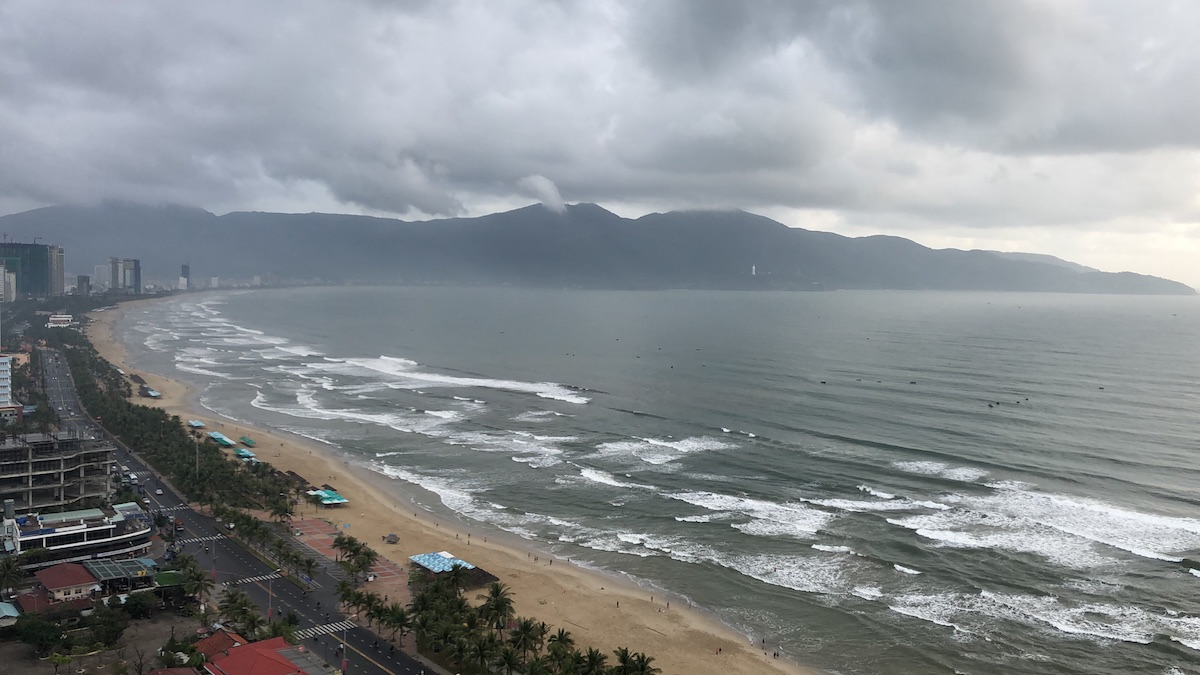
USS Roosevelt in Vietnam waters
P
By Pankaj Jha
Author • Centre for Security & Strategic Studies
USS Roosevelt in Vietnam waters
Share Analysis:
EXECUTIVE SUMMARY & STRATEGIC TAKEAWAYS

USS Theodore Roosevelt (CVN-71), the nuclear powered aircraft docked into Tien Sa Port, Danang, along with the Bunker hill, a highly sophisticated US navy cruiser, as part of a liaison visit. The aircraft carrier can carry 90 airc...

ADVERTISEMENT

The tango between US and Vietnam is not new in the current context as in the past US has lifted any restrictions with the Permanent Normalization of Trade Relations(PNTR) and has also listed Vietnam as one of the critical countries for trade relations when US signed the Trans Pacific Partnership(TPP). The only nagging issue between the two has been the issues of religious freedom and human rights. US as part of engaging Vietnam has also supported rehabilitation and medical support to the Vietnamese person affected by Agent Orange and other related ailments. The US withdrawal from TPP has to a certain extent stymied the cooperation between the two countries. The trade between the two countries did face some spin off sanctions which were imposed on China by the US. Even more recently US administration has put Vietnam, Malaysia, Indonesia and Thailand out of the developing country status along with India clearly highlighting that the benefits that these countries were enjoying vis-a-vis their entry into US market. The developing countries can subsidize production up to the value of 2% of exports. Now all these countries would be met with the same guidelines as used for developed countries. Does this means that the trade would be hampered between US and Vietnam. The possible answer is no, but then with regard to climate obligations, pollution and standards of the products exported to the US would be met with stringent quality controls. Given the fact that US is committed to protecting its interest, this was much foreseen so that Trump administration can undertake hard bargain with the Chinese trade representatives citing the regulations that have been imposed on the other developing countries. In this context China would have to comply with the US regulations and accept certain tariff conditions given the fact that its recovery from the post- Wuhan virus would be an arduous task both at political and economic level.

Vietnam after signing the Comprehensive partnership with the US in 2013, is looking forward for signing of the Strategic partnership with the US for developing its market and also developing its defence forces which have predominantly been dominated by Russian weapons, aircrafts and maritime systems. In the wake of the abrogation of the visiting Forces agreement with the US by Philippines while at the same time maintaining its commitment to the Mutual Defence Agreement, the US desperately needs partner closer to the South China Sea which can help US in reclaiming its strategic prominence in those waters. Vietnam fits the bill in certain aspects as it has the largest number of South China Sea islands (more than 30 islands) under its flag and has the coast which can support any military operations (even though Vietnam would not allow that under the current political dispensation) but might have to accommodate the US because of Chinese activities in non-disputed waters such as Vanguard bank. Further, China’s encroachments in Philippine administered Thitu islands through fishermen militia and coastguard means that the operating and maneuvering space which was there for the US is shrinking in size. Thitu islands is centrally located giving the strategic arc to control Spratlys islands.

The visit shows that Chinese underbelly is soft and vulnerable. Vietnam is also very categorical to state that the visit of one ships from any country is allowed in the Danang so as to develop military ties between nations. If one looks at the current Vietnamese Defence white paper released in 2019, the writings between the lines are critical of Chinese aggressive postures and Chinese fishermen militia to control waters. In response to the regular heckling and annoying tactics by Chinese fishermen militia, Vietnam also started its fishermen militia to counter Chinese lien of defence. USS Roosevelt has given comfort as well as anxiety among the littoral nations of South China Sea. The Chinese approach to resolve the issues through military force or bilateral dialogue might be met with Vietnamese resistance. As Vietnam is also the ASEAN chair for this year, there might be a ASEAN communique which might directly allude to Chinese activities in complete disregard to the Treaty of Amity and Cooperation (TAC) which China has signed with ASEAN. The Code of Conduct on South China Sea is still needs firming up with mechanisms for compliance and penalties for the non-abiding signatories. It is possible that during the annual summit in Vietnam later this year, there might be an escalation so that the issues gets highlighted in the ASEAN summit meetings as well as in East Asia Summit.

During the last year US has released two important documents which indeed the Indo-Pacific Strategy document in June and the Free and Open Indo-Pacific document in November 2019. In December 2019, PM Modi called for the Indo-Pacific Initiative to promote cooperation and interoperability. This shows synchronization of approach towards Indo-Pacific construct. The military and personnel exchange programme between us and Vietnam is already underway and the signing of the strategic partnership agreement would compete the gaps as Vietnam has already signed strategic partnership agreements with India, Japan and Australia. The signing of strategic partnership agreement would once again highlight the possible trajectory of ‘hub and spokes’ model with the Quad enrolling ASEAN members for the Indo-Pacific strategy.  

(Dr. Pankaj Jha is Executive Director of Centre for Security and Strategy Studies www.cescube.com)  


P
About Pankaj Jha →

Senior Research Fellow at Centre for Security & Strategic Studies.
ADVERTISEMENT

Related Strategic Analysis