Viet Nam's COVID-19 Diplomacy: Emergence of a Strong Regional Player
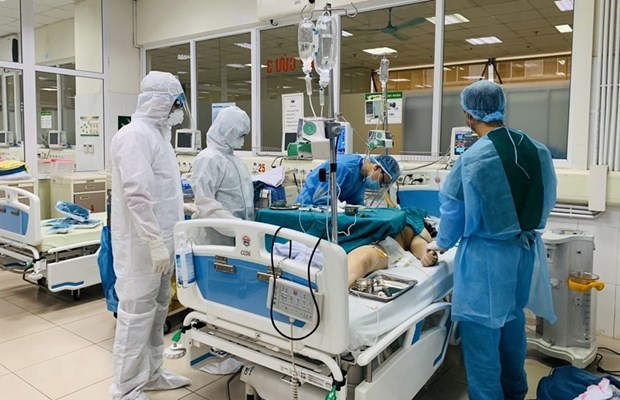
The world, since the end of December 2019, has been battling the global pandemic COVID-19 which has left the global financial situation in a flux. Most of the world economies have been in a state of stagnation and looking for ways of recove...
Viet Nam hosted the Special ASEAN Summit on COVID-19 Response under the Prime Ministership Nam Nguyen Xuan Phuc and the theme was “Cohesive and Responsive ASEAN. The purpose of this summit was to take the ASEAN Community to greater heights by promoting ASEAN's role in a world filled with uncertainties. The Summit reaffirmed their determination, commitment, spirit of cohesiveness, and responsiveness to tackle and promptly deal with the need to curb the spread of the COVID-19 disease. They discussed about extensive measures like the need to prevent, detect, control, respond, and enhance a collective pandemic preparedness to stop the massive spread of COVID-19. All the ASEAN nations agreed to fully strengthen cooperation on public health services with an exchange in real time information on epidemiological research and development and clinical treatment. They also agreed to develop anti-viral vaccination and medicines which would help enhance public health systems of the ASEAN nations. They aimed to enhance practical cooperation among the ASEAN defence establishments and held table top exercises for public health emergencies responses by the ASEAN Center of Military Medicine. A scientific cooperation network was formed by ASEAN Chemical, Biological and Radiological Defence Experts to enhance the professional linkages which had been agreed upon by the ASEAN Defence Ministers in the Defence Cooperation against the outbreak of the disease.
After the ASEAN Summit was held, the Chair Viet Nam also discussed the steps needed to be taken to mitigate and overcome the negative effects of the disease which impacted the socio-economic developments, and aimed to design plans for economic recovery with the ASEAN, plus nations like Japan, South Korea and China. They also discussed the lessons from sharing of information, experience, resuming connectivity, tourism reconstruction and setting up of businesses and social activities. They also worked towards the enhancement of the intra-bloc trade deployment of the economic stimulus along with the improvement of response-ability to external blocks.
ASEAN also held meetings with the various dialogue partners like China, the European Union and the United States of America and played high emphasis on the need to exchange experience, provide mutual assistance, and seek for effective responses along with the World Health Organisation (WHO). The result of exchange of timely information helped reduce cases along with timely announcements of social distancing, quarantine, wearing of masks in public places, and encouraging public awareness.
As a result of this coordination, there was a set of measures doled out. Countries faced an urgent need to stockpile medical equipment to deal with in case of emergencies and establish a cooperative fund in order to deal with the pandemic. The development of an exit plan was the need of the hour as part of the COVID-19 strategy and this would only be possible by forging regional coordination. An inclusive, integrated sustainable socio-economic recovery was needed for the development of this region along with common values of free trade, investment, facilitation and normalisation of cross border transport and trade activities.
Viet Nam has been able to emerge as a stronger regional partner among the ASEAN nations, especially the way they have held fort and supported all countries affected by COVID-19. Viet Nam has maintained a continuous supply of essential goods like food, which has been given on the request of the other countries. Viet Nam has been appreciated for their enthusiasm in joint efforts to combat the pandemic by setting up a stockpile of medicines, healthcare equipment and organising online drills as a form of common response process for the ASEAN in case of emergencies. Viet Nam has been instrumental with dealing with fake news being circulated to the ASEAN nations about COVID-19, and they established a very special working group of Senior ASEAN information officials to combat with fake news. The Alliance for Multilateralism on COVID-19 was hosted by the Deputy Prime Minister of Viet Nam Pham Binh Minh and he suggested Viet Nam's 4 S strategy- solidarity, share, stop and stimulate in the times of the coronavirus, which focused on strengthening multilateral relations keeping in mind the spirit of global solidarity aimed for an ideal global community. Solidarity was a crucial role player within multilateral institutions like ASEAN would help coordinate globally and regionally along with the support of the United Nations and the World Health Organisation. Viet Nam also promoted ‘Make in Viet Nam’ medical supplies and equipment to countries that were in need. This gave Viet Nam a lot of goodwill and support and also helped to boost the Made in Viet Nam, especially beneficial to their pharmaceutical industry. Sharing of information, experiences and best practices along with the advancement in research and development would help pave way for vaccines and medicines which would be accessible and sellable at affordable prices. Stopping the spread of the virus is important. There is a need to plan for stimulus, post the COVID-19 situation and this would also be possible if measures were taken to invest and work towards the trade market and economy, and revive the financial markets which would help boost confidence in the local people and their businesses. Therefore, Viet Nam has been applauded for these efforts that they have been tirelessly pursuing for the last three months by being the ASEAN Chair and that spirit has kept all the ASEAN nations cohesive and responsive, making Viet Nam the most-sought-after regional ASEAN partner in the future.
Globally too, Viet Nam has been increasing its influence by helping and supporting other countries during the time of the COVID-19. Viet Nam has been a great friend and partner with Australia. Both the leaders of the two countries spoke about ASEAN-Australia cooperation, especially in dealing and combatting the COVID-19 along with fostering cooperation through the existing mechanics, to sustain positive development in the Viet Nam-Australia strategic partnership. Australia also commended Viet Nam for the initiatives and the role played by them as the current ASEAN Chair. They also thanked Viet Nam for offering medical consular support for Australian citizens. Both Viet Nam and Australia agreed to continue their relationship with increased exchanges, information and experience sharing of the COVID-19 prevention and control work. They agreed for joint research and development of vaccines and production of medical supplies and equipment. Both the sides also agreed to convene an annual meeting between the two foreign ministers, deciding to work on strategic partnership, with focus on cooperation in healthcare, food security, and mitigation on the socio-economic impacts caused by the virus. Also, they agreed to continue to strengthen and mutually support each other in multilateral forums, especially in the United Nations and the ASEAN-led mechanisms on regional and international issues like maintaining peace, stability and security in the East Sea on the basis of respect for international law, especially the 1982 UN Convention on the Law of the Sea.
The Viet Nam's relationship with Australia is extremely important, as China’s aggressiveness is a major threat to Viet Nam and Australia. Viet Nam, due to China’s aggressiveness is becoming closer to the United States of America. For Viet Nam, which is considering signing a strategic partnership agreement with the U.S., intensifying relations with Australia, a U.S. ally would add to its regional clout. China last week rammed into and sank a Viet Nam shipping boat which had eight fishermen on board while fishing in the Paracel Islands, which is controlled by China and also claimed by Viet Nam. According to Viet Nam, it is clear that by doing this, China has violated Viet Nam’s sovereignty over the Paracel islands. This is against the bilateral relations between the two nations, and this was also voiced by a formal protest against China at the local embassy in Hanoi. The United States also strongly expressed concern over China’s behaviour and stated that these kinds of incidents are PRC’s actions to assert itself unlawfully and make maritime claims. It also provides an environment of discomfort among the Southeast Asian neighbours in the South China Sea. It has commented that since the outbreak of COVID-19 pandemic, China has announced that it has set up new research stations on military bases which are built on Fiery Cross Reef and Subi Reef, and landed special military aircraft on the Fiery Cross Reef. It also continued deployment of maritime militia around the Spratly Islands. China retaliated with a rather harsh comment of the U.S. to focus on its COVID-19 issues, rather than sending ships and aircraft to the South China Sea. The Philippines Foreign Affairs Ministry also came out with a strong statement expressing their concern over the Chinese sinking the fishing boat of Viet Nam, which was like the similar incident involving the Filipino fishing vessel last year. This support from the Philippines Ministry emphasised that Viet Nam had support and solidarity from its neighbouring countries too, which was another boost to them as a regional and a global power. More numerous nations now consider Viet Nam as a partner with common conflicts and common values.
Viet Nam’s ‘rice diplomacy’ for Cuba was one of the most different where 5,000 tons of rice was provided to Cuba in the severe times of the Coronavirus crisis. Cuba and Viet Nam have agreed to cooperate in developing drugs for COVID-19 treatment, and also work towards pharmaceutical products. Cuba’s Prime Minister was thankful to Viet Nam as they provided them with assistance on COVID-19 prevention; control and cooperation. Viet Nam in the ASEAN summit had promised to not leave any country alone and by providing Cuba with rice, Viet Nam fulfilled their promise and gained more respect, mutual trust and unity from the international community.
Viet Nam’s greatest success in individual dealing with other countries across the world has been through Viet Nam’s ‘mask diplomacy’, which has played a major role in working towards combating the COVID-19. By handing over ‘Made in Viet Nam’ face masks, Viet Nam has been able to show the countries that Viet Nam is a capable manufacturing hub, where it can provide world class quality products and by doing this, Viet Nam has been very smart in attracting countries like Japan, who are looking for Southeast Asian countries who can become manufacturing hubs, as the world is now shifting away from China due to the massive outbreak. Viet Nam manufactured and handed over 100,000 face masks for Sweden to fight the novel coronavirus. Both countries agreed to cooperate, exchange experiences and agreed to work towards the development and international integration. Minister Chairman of the Government Office Mai Tien Dung authorised by the Prime Minister of Viet Nam to hand over 50,000 face masks to the Russian Presidential Executive Office. Viet Nam has been instrumental to donating 110,000 anti-bacterial cloth masks and also providing the facilitation of a flight carrying British citizens back home safely. The United Kingdom has profusely thanked Viet Nam for their kind gesture. 2020 marks the 10th anniversary of Viet Nam strategic partnership and both the countries agreed to improve its effectiveness in the existing cooperation mechanisms. They have also further accelerated bilateral cooperation in the sector of politics, economy, security, defence education and also closely cooperate and coordinate in the cultural exchanges as well as in international forums and regional forums.
Viet Nam’s Permanent Deputy Foreign Minister Bui Thanh Son handed over Made in Viet Nam face masks and medical supplies worth 100,000 U.S. dollars to the Japanese Deputy Ambassador to Viet Nam, Asaduma Sinnichi and also thanked Viet Nam Government for taking care of 20,000 Japanese nationals living and working in Viet Nam. Apart from that, 500,000 medical masks had been handed over to the Japanese Prime Minister Shinzo Abe’s Office by the Viet Nam Government. Japanese Foreign Minister Motegi Toshimitsu provided Viet Nam with at least 200 million yen in aid to fight the COVID-19. The way China has been behaving aggressively in the South China Sea is a concern for Japan and Viet Nam as both have their own interests in the South China Sea. Since many Japanese firms are moving out of China due to COVID-19 pandemic, and are looking to invest in the Southeast Asian countries, Viet Nam can now become a major manufacturing hub for Japan. This would help build Viet Nam as a manufacturing hub with Japanese technology, and management skills would help boost the Viet Nam economy in a big way. This would also give Viet Nam an opportunity to become an even bigger producer of other goods and also help further strengthen its cloth manufacturing industry. Also, since Japan is in a security alliance with the United States like Australia, and the relations between Viet Nam and the United States are improving due to Chinese aggression. The Permanent Deputy Foreign Minister Bui Thanh Son also handed over 200,000 Made in Viet Nam face masks to the American Ambassador to Viet Nam Daniel J. Kritenbrik, and along with that handed over 500,000 face masks to the White House’s Office. Viet Nam through its ‘mask diplomacy’ could well develop a ‘Southeast Asian axis’ along with Japan and the U.S., backed by other nations which would help strengthen trilateral and maritime security relations and tackle Chinese maritime aggressiveness.
Viet Nam also indulged in ‘financial support and aid diplomacy’ and these facilities were given to several partners like Romania and Myanmar. The Vice President of the Viet Nam-Romania Friendship Association Bui Trong Dinh handed over 20,000 U.S. dollars to support Romania’s fight against the pandemic. The Deputy Minister of Foreign Affairs Nguyen Quoc Dung handed over 50,000 U.S. dollars to the Myanmar Ambassador to Viet Nam in order to win the battle of COVID-19 in Myanmar. Viet Nam also helped out through its ‘medical facilities diplomacy’ and under this, Viet Nam gifted medical equipment worth 7 billion VND to Laos and Cambodia and these medical equipment consisted of specialized protective clothing, medical masks, testing systems and COVID-19 test kits. Viet Nam sent breathing equipment, cleanroom suits, gloves, and face masks worth 500,000 USD to China, for fighting the COVID-19 pandemic.
It is refreshing to see the new or the reinvigorated zest and zeal in Viet Nam which is the cornerstone of being a stronger regional and global partner. The efforts made by Viet Nam in its COVID Diplomacy are been greatly appreciated, and has been termed as a very friendly and humanitarian partner in a severe crisis like COVID-19 pandemic by many countries. The way Viet Nam has conducted itself has paved the way to being an inclusive and stable partner. Viet Nam’s forward looking regional economic recovery plan post COVID-19 is a great initiative which has been commended by the ASEAN and its other members. It is now obvious that Viet Nam is a nation ready to lead the regional grouping as a stronger partner in the ASEAN. It is also commendable of the way Viet Nam has managed its mask diplomacy, medical facilities diplomacy and financial aid diplomacy all across the world, and not indulged in power politics or ideological politics. These are the precise reasons, as to why Viet Nam has emerged as a regional and global partner in a global crisis like the COVID-19.
Pic Courtesy -Vietnam News Agency and Vietnam News
(Gitanjali Sinha Roy is a researcher with Centre for Strategy and Security Studies, CS3 at cescube.com. The views expressed are personal)
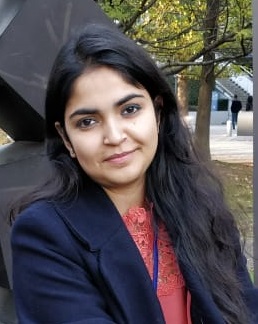
Gitanjali Sinha Roy is Assiatnt Professor at O P Jindla Global University and is a Ph.D. scholar at the Department of East Asian Studies, University of Delhi with specialisation in Japanese Studies. At present, she is a visiting Monbukagakusho (MEXT) Scholar at the University of Tokyo. Her M.Phil dissertation was Role of Female Labour Force in Japanese Economic Development: A Case Study of Womenomics in Abe's Reform Strategy. Gitanjali is a graduate in Political Science (Hons) from Miranda House and completed her post-graduation from Lady Shri Ram College of Commerce in Political Science as well. Her interest areas comprise of India and Japan's Foreign Policy, Security Strategy and Diplomacy, India-Japan Relations: Maritime Security and Strategy in the Indo-Pacific and Southeast Asian and South Asian Politics, Security Strategy and Diplomacy. Ms Roy had worked working with Centre for Land Warfare Studies(CLAWS) as a research assistant. Gitanjali Sinha Roy is a Research Associate at the Centre for Security and Security Studies (CESCUBE) and apart from this, she is a Fellow at the Japan Division at CESCUBE