Vietnam’s approach towards military modernisation
The seeds of Vietnam's military modernisation programme were sown shortly after the Socialist Republic of Vietnam was established in 1976, when the country was attacked by its giant neighbour, the People's Republic of China. Following Hanoi...
During the Cold War, Vietnam, like most Communist states, received huge amounts of Soviet military assistance. Because of Vietnam's geostrategic position, which was highlighted by the Sino-Vietnam War in 1979, Moscow decided to focus on the country's land forces. Despite Vietnamese appeals, the navy was mostly ignored - no submarines from the Soviet Union were supplied to Hanoi. Following the end of Soviet help in 1992, Vietnam's economy underwent a difficult shift under the Doi Moi programme, with the upkeep of existing assets becoming a major burden. In the mid-1990s, resources for modernization were accessible as a result of economic change. The distribution of resources would come to be determined by another external factor – China.
It took until 2001 for the country's leaders to agree to invest appropriately in the defence industry and supply cutting-edge technology to the military. Vietnam had two SAM systems, 75 SAMs, 50 portable SAMs, 50 short-range air-to-air missiles, 100 air-to-surface missiles, 270 anti-ship missiles, two patrol craft, four fighter/ground assault aircraft, and eight rapid attack craft between 2001 and 2005. All of these were received from Russia during the Cold War, underlining the importance of Hanoi-Moscow relations. Vietnam boosted its defence spending from $1.28 billion to $2.67 billion between 2006 and 2010. The country's defensive arsenal now includes two coastal defence systems, five more SAM systems, 200 anti-ship missiles, 200 guided rockets and guided bombs, 160 torpedoes, six patrol vessels, six submarines, and 20 fighter/ground attack aircraft.
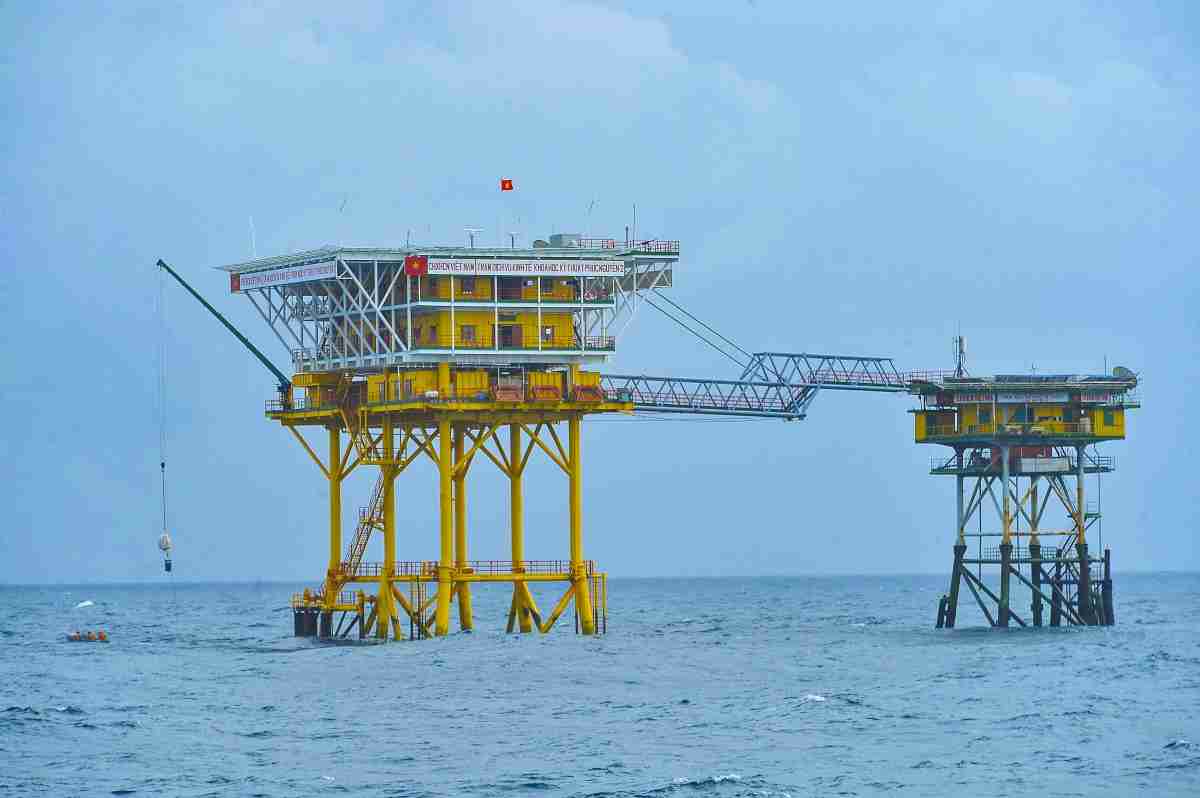
Because Vietnam has a 2,000-mile coastline facing the East Sea (South China Sea) and the marine economy contributes considerably to GDP, the government views maritime as a priority defence goal in the face of ongoing sovereign tensions in the South China Sea. In 2011, it released a thorough maritime plan for 2011-2020, designating maritime sovereignty and the maritime industry as critical pillars of national security. In 2018, Resolution 36 reaffirmed that a crucial purpose for Vietnam's economic development in the 2030-2045 period is to build the maritime sector in tandem with national defence.
Vietnam has seen some of the most dramatic increases in military spending in Southeast Asia, according to the Stockholm International Peace Research Institute (SIPRI). Its military spending nearly doubled between 2003 and 2018, from USD 841 million in 2003 to USD 5.5 billion in 2018. Despite the fact that Vietnam's naval and air forces may be unable to deal with East Sea/South China Sea crises. Hanoi lacks the financial means to directly compete with China's Southern Theatre Command. Furthermore, Hanoi's strategic posture is strained by Beijing's military installations on its newly constructed artificial islands.
However, Beijing’s geostrategic ambitions preclude a concentration of forces, Hanoi has moved to strengthen ties with New Delhi, Tokyo, and the US. The most well-publicized example of this was President Barack Obama's relaxation of the US embargo on the sale of lethal weapons to Vietnam in 2016. Vietnam and Australia signed a Strategic Partnership Agreement in November 2017. It is unclear whether these non-alignment ties will have the desired deterrent effect, and Vietnam's interests in the South China Sea are exacerbated by Philippines President Rodrigo Duterte's refusal to confront Chinese adventurism. With China in mind, India has promised Vietnam that it will get all conceivable support in modernising its armed forces, including weapon supply, fighter pilot and submariner training, and improved maritime capabilities. The two countries also agreed to produce a new five-year "joint vision statement" next year to build on the previous one during video-conference meetings between defence minister Rajnath Singh and his deputy General Ngo Xuan Lich on Friday.
Vietnam's efforts to modernise its military forces during the last two decades have been prompted by security threats posed by the South China Sea issue. However, with the assassination of Prime Minister Nguyen Tan Dung in 2016, big military acquisitions have essentially come to a halt. Aside from funding constraints, another major impediment to Vietnam's military modernisation is the Vietnam People's Army's (VPA) deeply ingrained ideology, which prioritises political action above military action and propaganda over battle. Since 2016, General Secretary Nguyen Phu Trong's high-profile anti-corruption effort has reduced the network of military officers engaging in rent-seeking operations, hurting the military procurement process directly.
By 2030, Vietnam wants to have a fully modernised military. However, critical areas such as strategy formulation, organisational reorganisation, and defence sector modernization still require additional work. The VPA's philosophy of prioritising political action over military action, in particular, has to shift. Given Vietnam's economic reliance on China, the future course of Vietnam's military modernization presents an ironic situation in which economic ties with China play a key role in boosting Vietnam's economic growth – the very thing that gives Vietnam the resources to defend against Beijing's belligerence in the South China Sea.
References
1. Houng le Thu (Sep 20, 2020), Rough Waters Ahead for Vietnam-China Relations, Carnegie endowment.
https://carnegieendowment.org/2020/09/30/rough-waters-ahead-for-vietnam-china-relations-pub-82826
2. Thayer, Carlyle A. "Force Modernization: Vietnam." Southeast Asian Affairs, vol. 2018, 2018, p. 429-444. Project MUSE muse.jhu.edu/article/692103.
3. Rajat pandit (Nov 27, 2020) India assures Vietnam of all help in military modernisation, Times of India: New Delhi.
https://timesofindia.indiatimes.com/india/india-assures-vietnam-of-all-help-in-military-modernisation/articleshow/79451439.cms
4. Understanding Vietnam’s Military Modernization Efforts – The Diplomat: https://thediplomat.com/2020/11/understanding-vietnams-military-modernization-efforts/
5. Vietnam Pushes Modernization as China Challenge Grows: https://www.defensenews.com/naval/2015/08/30/vietnam-pushes-modernization-as-china-challenge-grows/
6. Deterrence under the dragon’s shadow: Vietnam’s military modernisation: https://www.lowyinstitute.org/the-interpreter/deterrence-under-dragon-s-shadow-vietnam-s-military-modernisation
7. Vietnam - Defense and Security Sector: https://www.trade.gov/country-commercial-guides/vietnam-defense-and-security-sector
8. Vietnam’s Drive to Modernize Militarily—Causes And Implications: https://core.ac.uk/download/pdf/36736671.pdf
9. Armed Forces of Vietnam | Vivekananda International Foundation: https://www.vifindia.org/article/2018/august/10/armed-forces-of-vietnam
Pic Courtesy- Vietnam News Agency
(The views expressed are those of the author and do not represent views of CESCUBE.)

Gaurav Sen is a graduate from Delhi University. He is currently doing his Masters in International relations from Jawaharlal Nehru University, New Delhi. His research area includes IR theories, Great Power competition in Indo-Pacific, Maritime Security, Emerging Warfare Concepts, and Military Strategies.