Vietnam's efforts towards recovery and economic development after the COVID - 19
The COVID- 19 pandemic first appeared in Wuhan, Hubei - China and has spread worldwide, causing unprecedented suffering in human history, affecting human life, and ushering in severe economic recession worldwide. While vaccines have not bee...
Vietnam’s has adopted structured plans to control, prevent and eliminate the adverse effects of COVID-19, thereby ensuring the safety of human lives and maintaining social stability in the country. Due to the relatively long border with China, Vietnam has heavily suffered because of this pandemic. However, the government of Vietnam has proactively taken timely measures to detect the source of the disease, zoning off isolation and gradually controlling and repelling this disease with the motto of ensuring the safety of peoples’ lives.
The Vietnamese government has been proactive and flexible in capturing the data and through active intervention contained the epidemic from spreading. Vietnam’s success has contributed to convince people to be collaborative with the government in implementing the most effective measures to prevent and fight diseases and protect life. Accordingly, the Vietnam has outlined solutions, and implemented standard operating procedures to persuade the people to work together and unanimously agree with the direction of the Party and the Government as “anti-epidemic as anti-enemy”. That means “to stop the risk of disease transmission from the outside, resolutely insulate, focus on zoning the epidemic from the inside out and treat effectively” and “to sacrifice immediate economic benefits to protect lives of the people”[i].
In order to revive the domestic economy and social security, the Government has offered 3 types of solutions with 33 specific tasks to remove difficulties in production, restart businesses affected by COVID- 19 and a number of steps to promote the disbursement of social investment capital, especially public capital[ii]. Many policies to support people and businesses affected by the COVID-19 pandemic were implemented such as “monetary support packages of about Vietnamese Dong (VND) 300,000 billion(USD 12.5 billion), fiscal support packages of about VND 180,000 billion(USD 7.7 billion), social - welfare packages of over VND 62,000 billion, electricity price support package of VND 12,000 billion, telecommunication support package of VND 15,000 billion and about VND 20,000 billion of exemption and reduction of taxes, fees and charges for businesses and people, ... ”[iii]. At the same time, the government gave five stimulus measures to revive the economy, to attract investment from domestic economic sectors, promoting exports and public investment, encouraging domestic consumption and attracting FDI”[iv].
The fight against the COVID 19 epidemic and economic recovery in Vietnam requires the participation of the entire political system and people in the country and even overseas Vietnamese. Therefore, the co-operation, and close coordination of the diplomatic community and the government in implementation of plans and programmes with the spirit of “turning risks into opportunities” is extremely important. Up till now, Vietnamese diplomacy has been adhering to its role, becoming as a bridge between the Party, the State, the Government and the citizens and diaspora overseas.
With strong political determination and social consensus, as of June 3, 2020, Vietnam has had no new cases within 48 days and the disease was controlled with the number of infected cases 328, of which 298 cases were cured (accounted for 91% of the total number of patients) and no deaths were reported[v]. This is considered a great success demonstrating the unity from the will to the actions of Vietnam political system, the consensus between the Party, State, Government and the people as well as the power of great unity, patriotic tradition, and kindness of the Vietnamese people.
Vietnam supports and promotes international cooperation to fight the epidemic through sharing information, experiences, and creating a stable environment for investment. Despite many difficulties, Vietnam has had many activities to support and cooperate with about 20 countries and international organizations to repel pandemic NCOV[vi]
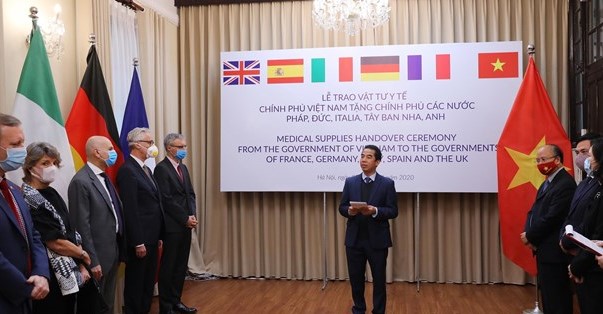
Following the motto of “Helping others to help yourself”, Vietnam has donated the medical equipment to Laos and Cambodia including protective gear, medical masks, antibacterial masks, testing systems with SARS-CoV-2 virus test kit; total value of more than VND 7 billion for each country[vii]. At the same time, Vietnam has also donated 500 testing tools to Indonesia, USD 50.000 to Myanmar to jointly prevent and combat COVID-19, 5000 tons of rice to Cuba. In particular, Vietnam offered China medical supplies and equipments including ventilators, protective clothing, gloves, and medical masks with a total value of about USD 500,000 as soon as COVID-19 occurred in China[viii]. Vietnam has also devoted part of its resources to helping the governments of strategic partners and traditional friends such as Japan, Russia, France, Germany, Italy, Spain and the United Kingdom, the United States, Sweden etc. to prevent and control of COVID-19. The Vietnam’s aid comprised of medical goods include masks, antibacterial clothing against infections, DuPont protective clothing made by Vietnam helping to protect people[ix].
In terms of international connectivity and cooperation, Vietnam has conducted unofficial telephone calls with the United States, Japan, South Korea, India, Australia and New Zealand to focus on updating the situation of COVID-19 in each of the dialogue partner countries, and across the world. Since then, governments have shared experiences and disease prevention measures as well as effective forms of cooperation to protect citizens, provided medical equipment, coordinate humanitarian aid and facilitate the cooperation to revive economy in the post – COVID-19[x]phase.
As ASEAN Chair in 2020, Vietnam has carried out many active diplomatic activities such as: The Chairman of the National Assembly Nguyen Thi Kim Ngan sent a letter to the member parliaments of the ASEAN Inter-Parliamentary Council (AIPA) calling for a joint action against the COVID -19 epidemic; Prime Minister Nguyen Xuan Phuc issued the ASEAN Chairperson Statement affirming ASEAN's determination and high political commitment to control and prevent epidemics. He chaired the ASEAN Coordinating Council to discuss about cooperation measures in ASEAN as well as ASEAN and partners to respond to epidemics, ASEAN-US Foreign Ministerial Online Conference to discuss international cooperation to prevent and control COVID-19; initiate the emergency response mechanism of the ASEAN region and with partners China, Japan, and Korea (ASEAN + 3); participated in G20 Summit, Online Summit for non-affiliated movement on disease prevention.
Thus, under the difficult conditions, Vietnam has to deal with both COVID-19 epidemic and economic stability, but Vietnam has achieved great success and controlled the epidemic. Besides, in its capacity, Vietnam has supported countries to prevent and fight against epidemics and received the high appreciation of many countries in the world and regional and international organisations, of which, notably 77 Foreign Non-Governmental Organization and Foreign Non-Governmental Data Center, the Friendship Union sent a letter of mutual gratitude, support for the Vietnam Government's effective anti-COVID -19 measures”[xi].
Vietnam’s diplomacy has contributed to economic recovery and development after the COVID pandemic. Since the discovery of the first case of COVID-19 in early January 2020, to April 22, Vietnam was one of the first countries to relax social isolation measures and gradually reopen country. The politico magazine of the US ranked Vietnam at the top of the global ranking of the anti-COVID-19 pandemic for the 30 leading countries in terms of economic efficiency and public health[xii]. In the current context, the slogan "anti-epidemic as anti-enemy" has been changed to "peaceful coexistence with pandemic".
The COVID-19 pandemic has caused many losses to Vietnam's economy: GDP in the first quarter of 2020 was only 3.82%; largely because of less number of international visitors arrivals, total retail sales of goods and revenue from consumer services; COVID-19 caused contraction of the consumer market for 85 per cent businesses; nearly 60 per cent lack capital and cut business cash flow, while 43 per cent have to retrench the labour to lack of jobs,[xiii]”.
In this context, Vietnam’s foreign ministry is determined to implement the “dual goal” to both drastically prevent epidemic, and maintain and develop economic and social activities, to ensure people's lives. Therefore, Vietnam actively propagates, encourages, analyzes and convinces people in the country and internationally to grasp effective epidemic prevention and control measures, combining epidemic prevention and socio-economic development, improving the resilience and adaptation of the economy. The Ministry of Foreign Affairs of Vietnam always informs domestic and international reporters about Vietnam's measures to attract foreign investment in the context of the complicated development of the COVID-19 epidemic around the world, affirming : “Although the outbreak of COVID-19 has been complicated in many countries in the world and in the region, but with the drastic implementation of effective measures to prevent and control epidemics, Vietnam has basically been up to now control and repel disease. This is a very important basis to strengthen the confidence of the business community, domestic and foreign investors in Vietnam”[xiv].
The Vietnam’s approach is to contain risks, overcome difficulties and challenges, create new development opportunities for the country; and take advantage of early control of epidemic, elevate Vietnam's prestige and international position. So, the Ministry of Foreign Affairs of Vietnam in close cooperation with the Government has been synchronously deploying many policies and measures to recover the economy during and after the COVID-19 such as ensuring the maintenance of the supply domestic and international goods and services, continuing to improve the business investment environment, reducing procedures and costs for businesses, developing infrastructure, logistics; actively deploying free trade agreements (FTAs) with partners; supporting businesses and investors to overcome difficulties caused by COVID-19 epidemic”[xv]. Thanks to that, Vietnam still attracts foreign investors to invest in Vietnam in the post COVID-19 times, focusing on 4 areas: information technology and high technology, electronics, e-commerce and logistics, consumer goods and retails.
Generally, the COVID- 19 pandemic has great impact on the whole world, in which Vietnam also suffered many difficulties and challenges. With the mission of maintaining political and social stability, creating a peaceful environment to carry out the renovation and deepening international integration, Vietnam has made an important contribution in controlling COVID -19 disease and the recovery of its economy that was recognized and highly appreciated by the people of the country and the international community. In the phase of extreme difficulties, Vietnam's economic growth remains high, macroeconomic parameters are stable, inflation is controlled, social security is ensured and people's lives are secure.
Endnotes
[i] http://dangcongsan.vn/tieu-diem/chong-dich-nhu-chong-giac-551842.html, accessed June 3, 2020
[ii] https://baodautu.vn/3-nhom-giai-phap-33-nhiem-vu-de-thao-go-kho-khan-vuc-day-nen-kinh-te-d119831.html, accessed June 3, 2020
[iii] http://baochinhphu.vn/Kinh-te/Dong-luc-moi-cho-nen-kinh-te-thoi-hau-COVID19/395336.vgp, accessed June 3, 2020
[iv] http://baochinhphu.vn/Phuc-hoi-nen-kinh-te/Thu-tuong-Vung-KTTD-phai-di-dau-phuc-hoi-phat-trien-kinh-te-sau-dich/396548.vgp, accessed June 3, 2020
[v] https://baoquocte.vn/covid-19-o-viet-nam-sang-36-48-ngay-khong-co-ca-mac-moi-o-cong-dong-phi-cong-nguoi-anh-da-mim-cuoi-116783.html, accessed June 3, 2020
[vi] http://baochinhphu.vn/Cac-bai-phat-bieu-cua-Thu-tuong/Bao-cao-cua-Chinh-phu-tai-phien-khai-mac-ky-hop-thu-9-Quoc-hoi-khoa-XIV/396026.vgp, accessed June 3, 2020
[vii] http://danvan.vn/Home/Phong-chong-dich-viem-duong-ho-hap-cap-do-chung-moi-cua-virus-corona-Covid-19/11825/Viet-Nam-tich-cuc-ho-tro-cac-quoc-gia-phong-chong-dai-dich-COVID-19, accessed June 3, 2020
[viii] http://danvan.vn/Home/Phong-chong-dich-viem-duong-ho-hap-cap-do-chung-moi-cua-virus-corona-Covid-19/11825/Viet-Nam-tich-cuc-ho-tro-cac-quoc-gia-phong-chong-dai-dich-COVID-19, accessed June 3, 2020
[ix] http://baochinhphu.vn/Tin-noi-bat/Trao-tang-vat-tu-y-te-ho-tro-Nhat-Ban-Hoa-Ky-Nga/393242.vgp, accessed June 3, 2020
[x] http://www.mofahcm.gov.vn/vi/mofa/tt_baochi/pbnfn/ns200514170422, accessed June 3, 2020
[xi] https://laodong.vn/the-gioi/ban-be-nuoc-ngoai-cam-on-viet-nam-bao-ve-cong-dong-truoc-covid-19-802203.ldo, accessed June 3, 2020
[xii] https://baoquocte.vn/tap-chi-politico-viet-nam-dung-dau-the-gioi-ve-hieu-qua-kinh-te-va-suc-khoe-cong-dong-trong-chong-dich-covid-19-116186.html, accessed June 4, 2020
[xiii] http://baochinhphu.vn/Kinh-te/Dong-luc-moi-cho-nen-kinh-te-thoi-hau-COVID19/395336.vgp, accessed June 3, 2020
[xiv] http://www.mofahcm.gov.vn/vi/mofa/tt_baochi/pbnfn/ns200514165859, accessed June 3, 2020
[xv] http://baochinhphu.vn/Cac-bai-phat-bieu-cua-Thu-tuong/Bao-cao-cua-Chinh-phu-tai-phien-khai-mac-ky-hop-thu-9-Quoc-hoi-khoa-XIV/396026.vgp, accessed June 3, 2020
(Pic Courtesy-Vietnam News Agency-TTXVN)
(Dr. Duong Minh Hue is senior researcher at Ho Chi Minh National Academy of politics. The views expressed are personal)
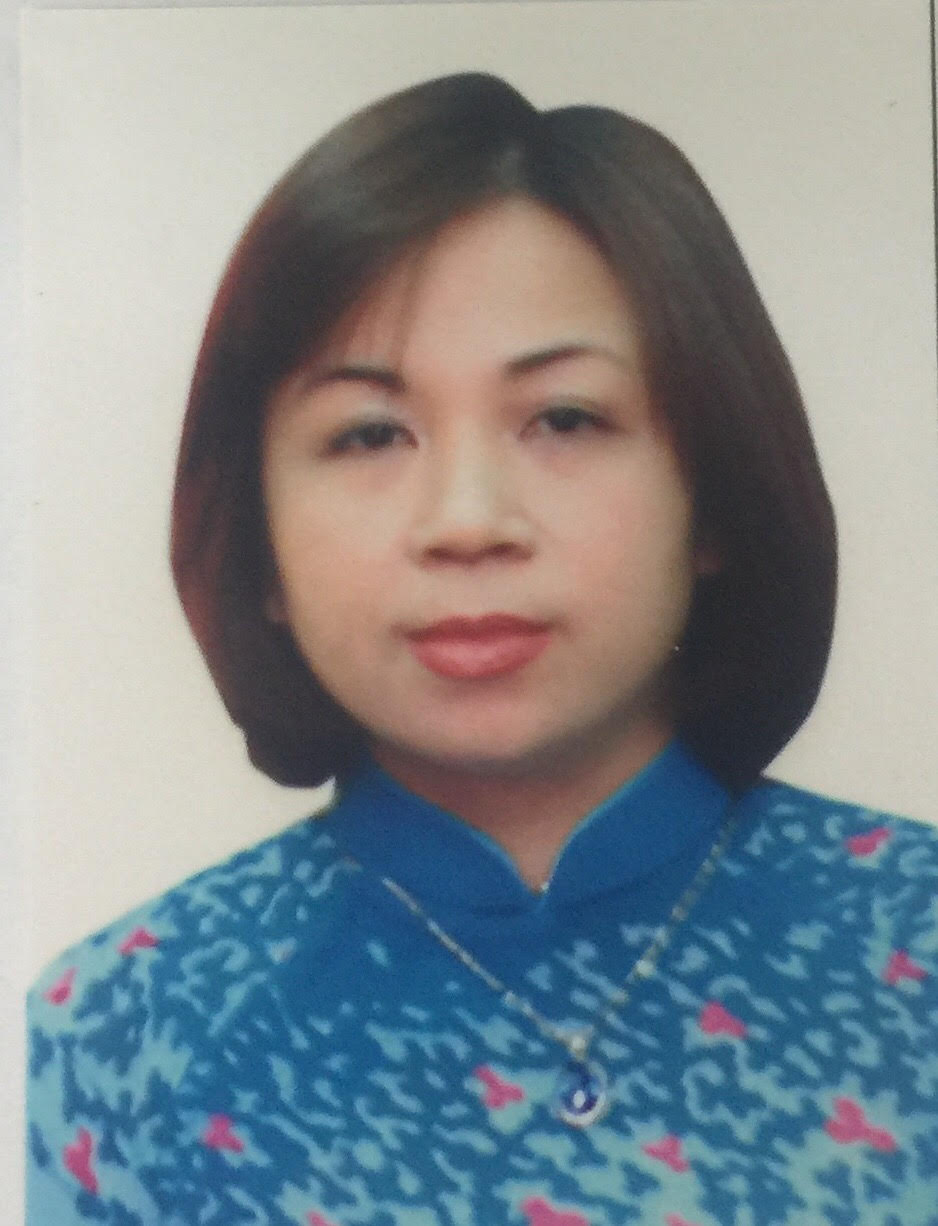
Ms. Hue was born in 1973, and has become a Doctor of Science in 2011 with a major in history. Ms. Hue has held many working positions and participated in many different fields of scientific research at Ho Chi Minh National Academy of Politics. Up to now, she has had a series of scientific studies published in Vietnam. Specifically, 17 scientific articles published in specialized journals with ISSN index, 7 speeches for international scientific conferences with ISBN index. She has participated in writing hundreds of books and conference proceedings domestically and internationally, including 01 specialized book, which she is the editor. Ms. Hue also participated in 18 scientific topics at all levels, including 3 topics headed by her. After many years working in the research and teaching national center, Ms. Hue has accumulated a wealth of experience and affirmed her scientific research capabilities through her practical work and research achievements. Now, Hue is a senior researcher at Ho Chi Minh National Academy of Politics, and a very prestigious scientist invited by many research agencies in Vietnam.