LIVE DISPATCH
Loss and Damage Finance: From COP28 Pledges to Policy Architecture Extended Deterrence Under Strain: Credibility, Assurance, and the Stability-Instability Paradox in the Indo-Pacific Beyond Consultation: BIMSTEC's Emerging Role in Regional Intelligence and Security Cooperation Maritime India: Security, Trade, and Great Power Competition Between the Desert and the Savannah: Conflict and the Political Economy of Instability in the Sahel Beyond Ukraine: Understanding Putin's Vision of Russian Power The Politics of Ali Khamenei's Funeral Silicon Sovereignty: How Semiconductors Are Redrawing Global Power Hierarchies Operation Sindoor and the Changing Dynamics of India–Pakistan Security The Negative Impact of US–Iran War on the Pacific Region Generative AI, Labour Sovereignty, and the Geoeconomics of India's Service Economy BRICS Expansion and the Multipolar Moment: Opportunity or Strategic Contradiction? India's AI Diplomacy and the Future of Strategic Technologies Foot-Dragging as Feminism: Iran, South Korea, and the Ungovernable Body Lethal Autonomous Weapons Systems and the Governance Deficit: Challenges to International Humanitarian Law and Accountability Beyond Proximity: Why the UAE Occupies a Growing Place in Iran’s Strategic Calculus Great Power Rivalry and the Crisis of the United Nations Why Fiji Matters: The New Geopolitics of the Indo-Pacific Islands Ten Years After Brexit: Regret, Reform, or Reversal? The Long Shadow of 1953: Understanding the Iran–US Conflict Sports, Strategy and Statecraft of Mega Sporting Events as Geoeconomic Instruments: Qatar 2022 to Saudi Arabia 2034 Border Fencing and National security: India’s Strategy along the Bangladesh Border Hardening the Quad: From Strategic Dialogue to Operational Cooperation Lingering Effects of the Bush Doctrine on Contemporary US Foreign Policy The Maghreb of States: Identity, Sovereignty, and the Limits of Non-Interference India’s BRICS 2026 Chairmanship Navigating a tightrope Amidst the Chinese Geopolitical Rise Beyond the Battlefield: Understanding Unconventional Security Challenges in Contemporary Geopolitics The Control Paradox: How Proxy Warfare Enables Strategic Deniability While Constraining Strategic Control Trapped in Deterrence: Nuclear Stability and the Persistence of Conflict in South Asia The Return of Unipolarity? U.S Strategic Primacy and the Future of the Global Order Supply Chains and Complicity: The Role of Global Corporations in Forced Labour in Xinjiang The Distant Threat: Is Israel Constructing a Strategic Rival in Pakistan Island Militarisation and Techno-Diplomacy: Turkey’s Eastern Mediterranean Fault Lines Amid India-Greece Alignment India’s Security Scenario: An Assessment of its Continental and Maritime Challenges The Geopolitical Architecture of European Defence: Navigating NATO Synergies, Transatlantic Retrenchment, and the Hybrid Threat Landscape The Artemis Accords and the Future of Global Space Governance AI and the Securitization of Critical Infrastructure: Implications of India's AI Summit Beyond Rhetoric: Evaluating the Effectiveness of International Sanctions on China’s Treatment of Uyghur Muslims The Emerging Maritime Rivalry in the Western Indian Ocean: India’s Response to Extra-Regional Powers India's Maritime Grand Strategy on Trial : The IRIS Dena Incident and the Indian Ocean Question Loss and Damage Finance: From COP28 Pledges to Policy Architecture Extended Deterrence Under Strain: Credibility, Assurance, and the Stability-Instability Paradox in the Indo-Pacific Beyond Consultation: BIMSTEC's Emerging Role in Regional Intelligence and Security Cooperation Maritime India: Security, Trade, and Great Power Competition Between the Desert and the Savannah: Conflict and the Political Economy of Instability in the Sahel Beyond Ukraine: Understanding Putin's Vision of Russian Power The Politics of Ali Khamenei's Funeral Silicon Sovereignty: How Semiconductors Are Redrawing Global Power Hierarchies Operation Sindoor and the Changing Dynamics of India–Pakistan Security The Negative Impact of US–Iran War on the Pacific Region Generative AI, Labour Sovereignty, and the Geoeconomics of India's Service Economy BRICS Expansion and the Multipolar Moment: Opportunity or Strategic Contradiction? India's AI Diplomacy and the Future of Strategic Technologies Foot-Dragging as Feminism: Iran, South Korea, and the Ungovernable Body Lethal Autonomous Weapons Systems and the Governance Deficit: Challenges to International Humanitarian Law and Accountability Beyond Proximity: Why the UAE Occupies a Growing Place in Iran’s Strategic Calculus Great Power Rivalry and the Crisis of the United Nations Why Fiji Matters: The New Geopolitics of the Indo-Pacific Islands Ten Years After Brexit: Regret, Reform, or Reversal? The Long Shadow of 1953: Understanding the Iran–US Conflict Sports, Strategy and Statecraft of Mega Sporting Events as Geoeconomic Instruments: Qatar 2022 to Saudi Arabia 2034 Border Fencing and National security: India’s Strategy along the Bangladesh Border Hardening the Quad: From Strategic Dialogue to Operational Cooperation Lingering Effects of the Bush Doctrine on Contemporary US Foreign Policy The Maghreb of States: Identity, Sovereignty, and the Limits of Non-Interference India’s BRICS 2026 Chairmanship Navigating a tightrope Amidst the Chinese Geopolitical Rise Beyond the Battlefield: Understanding Unconventional Security Challenges in Contemporary Geopolitics The Control Paradox: How Proxy Warfare Enables Strategic Deniability While Constraining Strategic Control Trapped in Deterrence: Nuclear Stability and the Persistence of Conflict in South Asia The Return of Unipolarity? U.S Strategic Primacy and the Future of the Global Order Supply Chains and Complicity: The Role of Global Corporations in Forced Labour in Xinjiang The Distant Threat: Is Israel Constructing a Strategic Rival in Pakistan Island Militarisation and Techno-Diplomacy: Turkey’s Eastern Mediterranean Fault Lines Amid India-Greece Alignment India’s Security Scenario: An Assessment of its Continental and Maritime Challenges The Geopolitical Architecture of European Defence: Navigating NATO Synergies, Transatlantic Retrenchment, and the Hybrid Threat Landscape The Artemis Accords and the Future of Global Space Governance AI and the Securitization of Critical Infrastructure: Implications of India's AI Summit Beyond Rhetoric: Evaluating the Effectiveness of International Sanctions on China’s Treatment of Uyghur Muslims The Emerging Maritime Rivalry in the Western Indian Ocean: India’s Response to Extra-Regional Powers India's Maritime Grand Strategy on Trial : The IRIS Dena Incident and the Indian Ocean Question
ADVERTISEMENT
Military April 13, 2021 2701 Reads

Vietnam's policy priorities and the US-China tensions in South China Sea
P
By Pankaj Jha
Author • Centre for Security & Strategic Studies
Vietnam's policy priorities and the US-China tensions in South China Sea
Share Analysis:
EXECUTIVE SUMMARY & STRATEGIC TAKEAWAYS

Vietnam after its chairmanship fo ASEAN has also assumed the role of non-permanent member of UNSC in 2020. The elevation from a regional leader to a global stakeholder has provided better understanding of regional dynamics and global respon...

ADVERTISEMENT

The well-deserved third term for the General Secretary of the Vietnamese Communist Party Nguyen Phú Trung has provided that foundation for Vietnam to embark on managing its relationship with the two major powers- the US and China in the Indo-Pacific. Vietnam has not subscribed to the US policy towards Indo-Pacific and has been carefully weighing its strategic and economic options. The tensions between US and China in South China Sea (SCS) and Chinese assertive posture on Taiwan has created unique predicament for Vietnam where it sees that in order to keep the two countries at a safe distance and maintain neutrality so that it does not impact security interest of Vietnam.

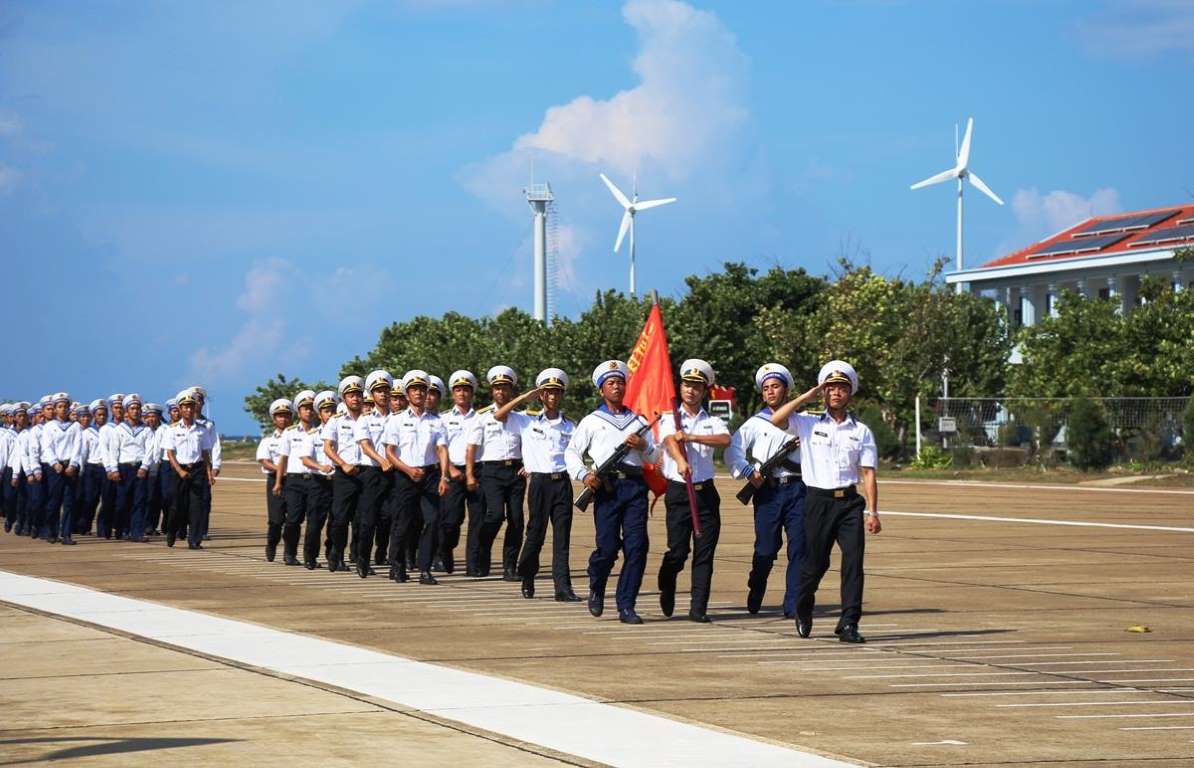
In order to not to rely on either the US or China for its security needs, it has been quietly working on upgrading its defences in South China Sea islands under its flag. This adroitness and deft diplomacy are likely to give Vietnam the benefit of the better trade relations with China while at the same time engaging the US in terms of its market and large-scale investment which are going to come from the US. Vietnam in the post COVID-19 scenario would require the help of both the countries. As the US has already promised to help upgrade Vietnam technological institutions and work on providing better avenues for education for the Vietnamese students. On the other hand, China has been cautious of the fact that it cannot annoy Vietnam to such an extent that it enters into a strategic partnership agreement with the US. Vietnam has been steadfastly maintaining its neutrality and has clearly remarked that it will not be ceding away the Cam Ranh Bay to any one particular power and would be working for better cohesion in the ASEAN forums.

While a number of the US think tanks (Rand, Carnegie and others) have been propagating that Vietnam- China relations is going to get more troubled and complex but both the countries capitals have issued diplomatic statements buttressing their ideological solidarity and the frequent show of goodwill completely undermining the maritime disputes. Vietnamese government has very strongly tried to keep its diplomatic interactions with China on an equal footing while at the same time it has engaged with the European powers as well as the US so that they give due attention to Vietnamese requests related to South China Sea.

In one of the Rand reports titled ‘Regional Responses to U.S.-China Competition in the Indo-Pacific Vietnam’ written by Derek Grossman, which was published in the year 2020 which talks about the US -China competition in the Indo-Pacific and the role of Vietnam in that context. It clearly addresses the fact that China has an increasing in influence in Vietnam in comparison to the United States. It admits the fact that Beijing is dominant in Vietnam’s economic superstructure but also acknowledges the fact that the US -Vietnam ties could only be enhanced only if tensions between China and Vietnam reach a threshold or an armed conflict begins. As a countermeasure, the report recommended that United States should adopt a multifarious approach so as to engage with political leadership as well as economic majors so as to bring about unison with regard to commitment towards the United States priorities and interest. It also suggested that United States should provide alternative options in order to counter the Belt and Road Initiative of China. Interestingly, it also suggests that at a senior level the interaction should be promoted between US Air Force and Vietnamese air forces and the two sides should take up cooperative activities which are non-military in nature. Given the fact that Vietnam is acknowledged as a critical country for the US interests in the Indo-Pacific plan of action. Therefore, Washington is compelled to organically engage Vietnamese leaders and make them understand the utility of the US in for the larger security outlook of Vietnam. Vietnam’s constitution has maintained that the US is an adversary country and any engagement or negotiations with the US is not acceptable.

China has also been cautious that in the wake of tensions in SCS the issue should not aggravate to a maritime conflict. The strategic autonomy that Vietnam has maintained would be helpful in keeping SCS tensions within a limit and also help in maintaining the sanctity of multilateral negotiations under ASEAN rubric. 


(Pic Courtesy- Vietnam News Agency )

(the views expressed are those of the author and do not represent the views of CESCUBE.)

P
About Pankaj Jha →

Senior Research Fellow at Centre for Security & Strategic Studies.
ADVERTISEMENT

Related Strategic Analysis