Vietnam’s relations with China and the USA- A delicate act of balancing
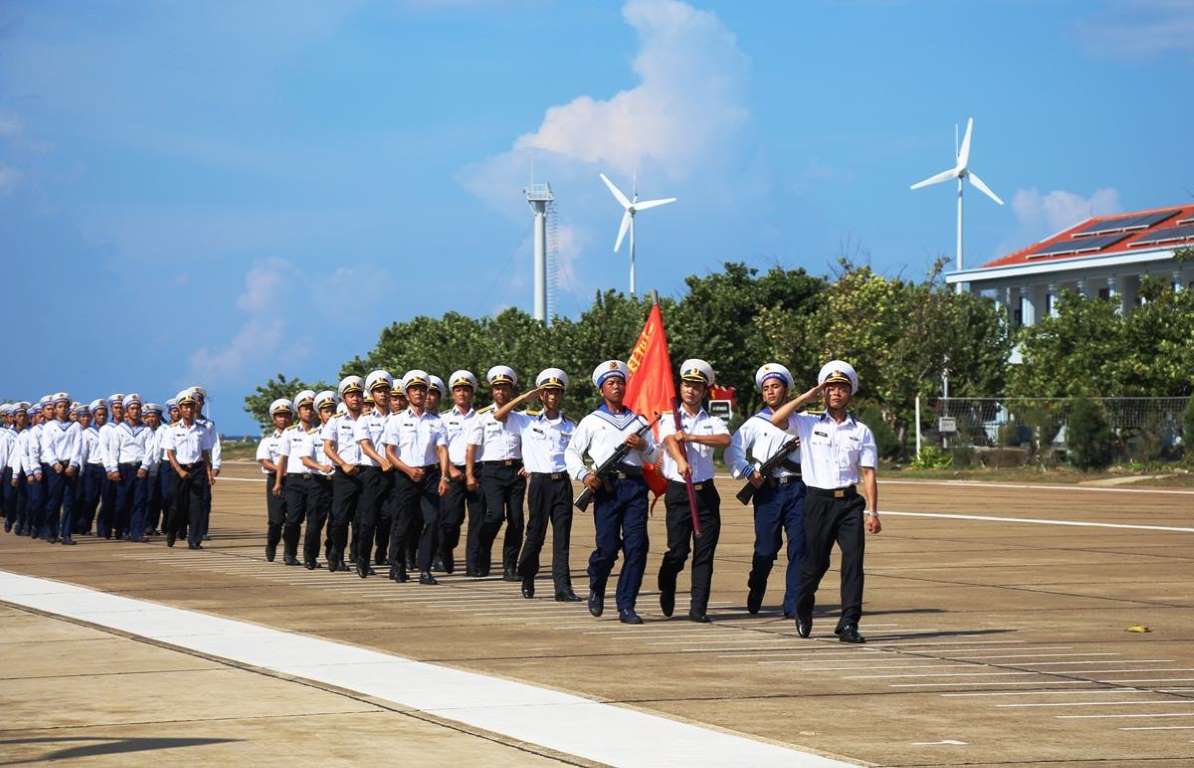
There hasn't remained a region untouched by the ongoing US-China rivalry. One region that has emerged as the main theatres of Sino-US rivalry is the region of southeast Asia, with the relentless rise of China and its adventurism in the Sout...
The power tussle among the two superpowers has created strategic uncertainties for the entire region. In the backdrop of these changing situations, Vietnam has adopted the strategy of hedging to gain maximum diplomatic and economic benefit on the one hand while simultaneously minimizing the security threats on the other. The rising belligerence of China in the south china sea has forced Hanoi to look towards the west and diversify its options. The United States; an existing superpower serves as the best suitable counter for China; an emerging superpower, and thus making the balancing more of a compulsion than a choice for Vietnam.
With the assiduous rise of China, the policy of hedging has served to be the best option available for a nation like Vietnam. However, it still chooses indirect balancing over direct balancing policies. The complex structure of Vietnam’s interest in the region is the reason for its ambiguous policy of hedging. Vietnam’s geography has been one of the reasons for its insecurity. It shares a maritime border with China that still remains unsettled resulting in conflicts over Spratly and the Paracel Islands. Vietnam being inextricably linked with China is well aware of the fact that it can't antagonize China. Thus, it follows the policies of low-Intensity balancing towards Beijing while simultaneously providing a closer engagement.
China is the largest trading partner of Hanoi but at the same time with the history of multiple invasions and a month-long border conflict in 1979 led to this perception of it being the greatest danger to its sovereignty. There has been rising resentment in Vietnamese people against China in recent years. Both China and Vietnam share a troubled and complicated relationship despite shared customs and heritage. In the current situation where there is rising mistrust among both the neighbours, strengthening relations with the United States and using it as leverage to deter China provides be the best available option for Hanoi. However, the differences in the governing structure of the US and Vietnam and the troubled history make it distrustful of the United States. A history of 21 years of devastating war from 1954 to 1975 with continued confrontation as adversaries in Cold war till 1991 has its impact on the bilateral relations of both the nations. It was only in 1995 that United State and Vietnam normalized their bilateral relations. The partnership that took place to counter China’s increasing influence in the region has now reached a level of comprehensive partnership. The pivot to Asia policy that lifted the arms embargo on Vietnam during the Obama administration resulted in a manifold increase in trade among both economies. The overlapping strategic interests of both nations have provided the needed thrust for boosting the relations. The presence of the USA in the west Pacific makes it the best option for Vietnam to use it as leverage against China. Although the US became the second-largest trading partner of Hanoi in 2019 with a bilateral trade of $83.1 billion, it still falls behind China with which the trade soars past $100 billion. The great advancements in the bilateral relations with the United States, however, don't imply in any way that Hanoi is going to ‘choose’ Washington over Beijing unless there is a dramatic change in the emerging dynamics in the region. There is a Chinese saying that fits best when it comes to China’s influence over Vietnam that is “distant water will not quench the fire nearby” meaning Hanoi can’t count on other powers to manage relations with China. Thus, making Vietnam conscious of putting all its eggs in the same baskets. However, the release of White Papers in 2019 indicated how Vietnam won’t shy out from taking bold measures if its national interest is threatened.
Vietnam follows the policy of “3 No’s” (no alliances, no foreign bases, and no relationship with one country to be used against another) this policy based on non-alignment was recently updated to “4 NO’s (4th being no use of force or threat to use force) and One Depends”, in the white papers released by Hanoi in 2019. The ‘One Depends’ by many is being seen to be a caveat as it states "depending on circumstances and specific conditions, Vietnam will consider developing necessary, appropriate defence and military relations with other countries."
As a member country of ASEAN Vietnam too relies on UNCLOS and rule-based order. the 2016 ICJ ruling in favour of the Philippines against China's claim on the 9-dash line was supported by Vietnam. Although the ruling was not upheld by China and acted as a lesson for Hanoi about how when it comes to China, International laws aren’t enough thus making it invest in its navy and improve its maritime security. Vietnam has also shown scepticism around the long-term strategic and economic implications of China's Belt and Road Initiatives in the region. It has elegantly sought to balance between the powers and not take sides. Vietnam is well aware of the fact that China, even if not preferred but is an unavoidable partner. Although the political reforms in both the nations have taken different speed both China and Vietnam are governed by communist parties. The bilateral relations go beyond the economy as both share many common customs. China is intricately linked with Hanoi and thus is inexorable. Nevertheless, despite the comradery, there exists fundamental distrust among Vietnamese for China. But the Influence of Beijing in the country still remains to be more prominent and Hanoi's top priority is still going to be having positive relations with its neighbour. However, the bilateral challenges and trends of China being assertive in the South China Sea among neighbours might keep pushing Vietnam closer to the United States. Vietnam is emerging to be one of the most important partners of the US in the Indo-pacific and is crucial for its free and open Indo-pacific policy. Vietnam has shown its approval of the U.S. Indo-pacific strategy but America's previous government policies of "America First" and Trump's decision of leaving TPP (Trans-Pacific Partnership) have left Vietnam sceptical of America’s sustainability of Indo-Pacific. It is only if the tensions between China and Vietnam reach a breaking point leading to armed conflict between the two could lead to a dramatic ramping up of the US-Vietnam relations. But as of now in a realist scenario, it is difficult to imagine Vietnam opting for Washington over Beijing.
The 3no’s policy doesn’t allow Hanoi to be a part of any grouping like Quad, but as per the new policy of 4 No’s and One Depends, the Depend factor makes it clear that if the national interest of the country is affected it might consider joining such groupings against the rise of China. The rising rivalry among the superpowers is not in favor of Vietnam, but the most likely course of action in the future for Vietnam is continued hedging. Although the economic edge of China over the United States is significant. united states have gained an edge in terms of diplomatic and military relationship with Hanoi. The US-China row in the region is going to have a continued destabilizing impact on the region affecting the trade and international investment-based economy of Hanoi. Amidst the escalating rivalry between the US and China Vietnam will have to navigate through both powers without compromising its autonomy. But it is unlikely that it will move ahead with any one of them, rather Hanoi is diversifying its relations with other powers like India, Japan, South Korea, Australia, etc. Vietnam is likely to continue the delicate dance of balancing between both nations as long as its sovereignty is threatened and China doesn't remain manageable.
More recently China has deployed more than 200 large fishing boats in contentious waters inside Philippines Exclusive Economic Zone. The complexity of the 200 Chinese fishing vessels and the US military exercises in SCS have aggravated crisis leading to a more tense regional situation, threatening small countries. With the India's entry as non-permanent member of UNSC this year, India should play a big role in the UNSC and needs to contribute to efforts of the US, ASEAN and Vietnam to maintain peace in the region.
REFERENCES
[1] https://carnegieendowment.org/2020/09/30/rough-waters-ahead-for-vietnam-china-relations-pub-82826
[3] https://thediplomat.com/2021/01/what-does-vietnam-want-from-the-us-in-the-south-china-sea/
[4] https://thediplomat.com/2021/03/vietnam-asean-and-the-us-china-rivalry-in-the-indo-pacific/
[6] https://www.reuters.com/article/us-vietnam-politics-congress-idUSKBN29Q0ES
[7] https://www.rand.org/blog/2018/03/vietnams-remarkable-month-of-balancing-against-china.html
[8] https://southeastasiaglobe.com/vietnam-and-the-superpowers/
[9] https://calhoun.nps.edu/handle/10945/58271
Pic Courtesy-Vietnam News Agency
(The views expressed are those of the author and do not represent the views of CESCUBE.)

Ragini Kashyap is a graduate from Delhi University and is currently pursuing Masters in Politics with specialisation in International Relations from Jawaharlal Nehru University, New Delhi. Her research area includes global political economy, Indo-China Relations and Emerging politics in the Indo-Pacific.