LIVE DISPATCH
Loss and Damage Finance: From COP28 Pledges to Policy Architecture Extended Deterrence Under Strain: Credibility, Assurance, and the Stability-Instability Paradox in the Indo-Pacific Beyond Consultation: BIMSTEC's Emerging Role in Regional Intelligence and Security Cooperation Maritime India: Security, Trade, and Great Power Competition Between the Desert and the Savannah: Conflict and the Political Economy of Instability in the Sahel Beyond Ukraine: Understanding Putin's Vision of Russian Power The Politics of Ali Khamenei's Funeral Silicon Sovereignty: How Semiconductors Are Redrawing Global Power Hierarchies Operation Sindoor and the Changing Dynamics of India–Pakistan Security The Negative Impact of US–Iran War on the Pacific Region Generative AI, Labour Sovereignty, and the Geoeconomics of India's Service Economy BRICS Expansion and the Multipolar Moment: Opportunity or Strategic Contradiction? India's AI Diplomacy and the Future of Strategic Technologies Foot-Dragging as Feminism: Iran, South Korea, and the Ungovernable Body Lethal Autonomous Weapons Systems and the Governance Deficit: Challenges to International Humanitarian Law and Accountability Beyond Proximity: Why the UAE Occupies a Growing Place in Iran’s Strategic Calculus Great Power Rivalry and the Crisis of the United Nations Why Fiji Matters: The New Geopolitics of the Indo-Pacific Islands Ten Years After Brexit: Regret, Reform, or Reversal? The Long Shadow of 1953: Understanding the Iran–US Conflict Sports, Strategy and Statecraft of Mega Sporting Events as Geoeconomic Instruments: Qatar 2022 to Saudi Arabia 2034 Border Fencing and National security: India’s Strategy along the Bangladesh Border Hardening the Quad: From Strategic Dialogue to Operational Cooperation Lingering Effects of the Bush Doctrine on Contemporary US Foreign Policy The Maghreb of States: Identity, Sovereignty, and the Limits of Non-Interference India’s BRICS 2026 Chairmanship Navigating a tightrope Amidst the Chinese Geopolitical Rise Beyond the Battlefield: Understanding Unconventional Security Challenges in Contemporary Geopolitics The Control Paradox: How Proxy Warfare Enables Strategic Deniability While Constraining Strategic Control Trapped in Deterrence: Nuclear Stability and the Persistence of Conflict in South Asia The Return of Unipolarity? U.S Strategic Primacy and the Future of the Global Order Supply Chains and Complicity: The Role of Global Corporations in Forced Labour in Xinjiang The Distant Threat: Is Israel Constructing a Strategic Rival in Pakistan Island Militarisation and Techno-Diplomacy: Turkey’s Eastern Mediterranean Fault Lines Amid India-Greece Alignment India’s Security Scenario: An Assessment of its Continental and Maritime Challenges The Geopolitical Architecture of European Defence: Navigating NATO Synergies, Transatlantic Retrenchment, and the Hybrid Threat Landscape The Artemis Accords and the Future of Global Space Governance AI and the Securitization of Critical Infrastructure: Implications of India's AI Summit Beyond Rhetoric: Evaluating the Effectiveness of International Sanctions on China’s Treatment of Uyghur Muslims The Emerging Maritime Rivalry in the Western Indian Ocean: India’s Response to Extra-Regional Powers India's Maritime Grand Strategy on Trial : The IRIS Dena Incident and the Indian Ocean Question Loss and Damage Finance: From COP28 Pledges to Policy Architecture Extended Deterrence Under Strain: Credibility, Assurance, and the Stability-Instability Paradox in the Indo-Pacific Beyond Consultation: BIMSTEC's Emerging Role in Regional Intelligence and Security Cooperation Maritime India: Security, Trade, and Great Power Competition Between the Desert and the Savannah: Conflict and the Political Economy of Instability in the Sahel Beyond Ukraine: Understanding Putin's Vision of Russian Power The Politics of Ali Khamenei's Funeral Silicon Sovereignty: How Semiconductors Are Redrawing Global Power Hierarchies Operation Sindoor and the Changing Dynamics of India–Pakistan Security The Negative Impact of US–Iran War on the Pacific Region Generative AI, Labour Sovereignty, and the Geoeconomics of India's Service Economy BRICS Expansion and the Multipolar Moment: Opportunity or Strategic Contradiction? India's AI Diplomacy and the Future of Strategic Technologies Foot-Dragging as Feminism: Iran, South Korea, and the Ungovernable Body Lethal Autonomous Weapons Systems and the Governance Deficit: Challenges to International Humanitarian Law and Accountability Beyond Proximity: Why the UAE Occupies a Growing Place in Iran’s Strategic Calculus Great Power Rivalry and the Crisis of the United Nations Why Fiji Matters: The New Geopolitics of the Indo-Pacific Islands Ten Years After Brexit: Regret, Reform, or Reversal? The Long Shadow of 1953: Understanding the Iran–US Conflict Sports, Strategy and Statecraft of Mega Sporting Events as Geoeconomic Instruments: Qatar 2022 to Saudi Arabia 2034 Border Fencing and National security: India’s Strategy along the Bangladesh Border Hardening the Quad: From Strategic Dialogue to Operational Cooperation Lingering Effects of the Bush Doctrine on Contemporary US Foreign Policy The Maghreb of States: Identity, Sovereignty, and the Limits of Non-Interference India’s BRICS 2026 Chairmanship Navigating a tightrope Amidst the Chinese Geopolitical Rise Beyond the Battlefield: Understanding Unconventional Security Challenges in Contemporary Geopolitics The Control Paradox: How Proxy Warfare Enables Strategic Deniability While Constraining Strategic Control Trapped in Deterrence: Nuclear Stability and the Persistence of Conflict in South Asia The Return of Unipolarity? U.S Strategic Primacy and the Future of the Global Order Supply Chains and Complicity: The Role of Global Corporations in Forced Labour in Xinjiang The Distant Threat: Is Israel Constructing a Strategic Rival in Pakistan Island Militarisation and Techno-Diplomacy: Turkey’s Eastern Mediterranean Fault Lines Amid India-Greece Alignment India’s Security Scenario: An Assessment of its Continental and Maritime Challenges The Geopolitical Architecture of European Defence: Navigating NATO Synergies, Transatlantic Retrenchment, and the Hybrid Threat Landscape The Artemis Accords and the Future of Global Space Governance AI and the Securitization of Critical Infrastructure: Implications of India's AI Summit Beyond Rhetoric: Evaluating the Effectiveness of International Sanctions on China’s Treatment of Uyghur Muslims The Emerging Maritime Rivalry in the Western Indian Ocean: India’s Response to Extra-Regional Powers India's Maritime Grand Strategy on Trial : The IRIS Dena Incident and the Indian Ocean Question
ADVERTISEMENT
Security March 13, 2023 1333 Reads

Visit of Indian NSA to Russia-A low profile visit with high expectations
N
By Neha Singh Dayma
Author • Centre for Security & Strategic Studies
Visit of Indian NSA to Russia-A low profile visit with high expectations
Share Analysis:
EXECUTIVE SUMMARY & STRATEGIC TAKEAWAYS

India and Russia have had a strong bilateral relationship for decades. The two countries share a strategic partnership that has been built on mutual trust, respect, and cooperation. In recent times, the relationship between India and Russia...

ADVERTISEMENT

In this context, the first section of the article will try to shed light on the highlights of the meeting of Secretaries of Security Councils on Afghanistan. The following section will focus on the meeting between Doval and his Russian counterparts and why this meeting is significant in the present context.

Meeting of Secretaries of Security Councils/NSAs on Afghanistan

The meeting of Secretaries of Security Councils/NSAs on Afghanistan was hosted by Russia and was attended by officials from several countries, including India. The aim of the meeting was to discuss the situation in Afghanistan and to explore ways in which the participating countries could work together to address the challenges facing the country. The meeting was significant as it brought together officials from different countries who have a stake in Afghanistan's stability and security.

During the meeting, Doval pledged India's commitment to the Afghan people, stating that India will “never abandon the Afghan people in their time of need.” He emphasized the importance of an inclusive and representative government in Afghanistan and called for collective efforts to fight terrorism.

Sources report that Doval emphasized the importance of preventing Afghanistan from becoming a breeding ground for radicalization and terrorism, both regionally and globally. He also urged for increased intelligence and security cooperation to address terrorist groups, including those recognized under UNSCR 1267. He also reiterated the significance of UNSCR 2593 (2021), which calls for terrorist organizations, including those identified by UNSCR 1267, to be deprived of safe haven in the region.

The Indian NSA pointed out that the well-being and humanitarian needs of the Afghan people are India's foremost priority. India has delivered 40,000 metric tonnes of wheat, 60 tonnes of medicines, 500,000 Covid vaccines, winter clothing, and 28 tonnes of disaster relief to Afghanistan since the Taliban takeover in August 2021. He has further pointed out that over the past two years, India has awarded new scholarships to 2,260 Afghan students, including 300 girls

Doval further reiterated India's historical and special relationship with Afghanistan and stressed that India will remain an important stakeholder in Afghanistan. He stated that India has always stood by the people of Afghanistan and will always support collective efforts to help the Afghan people build a prosperous and vibrant nation once again.

Meeting with Russian officials

On the second day of his visit, Doval had several high-level meetings with officials of the Russian government, including President Vladimir Putin, Secretary of the Russian Security Council Nikolai Patrushev, and Deputy Prime Minister of the Russian Federation and Minister of Trade and Industry, Denis Manturov.

During his meeting with Putin, Doval discussed several issues of mutual interest, including the situation in Afghanistan and the bilateral relationship between India and Russia. The two sides agreed to continue working towards implementing the India-Russia strategic partnership. Their talks also focused on defence ties and projects, energy and fertilizer supply, as well as boosting trade in national currencies and connectivity initiatives.

The Indian embassy in Moscow shared a Twitter post, which read, “NSA Ajit Doval called on HE President Putin. Wide-ranging discussion on bilateral and regional issues. Agreed to continue work towards implementing the India-Russia strategic partnership.”

Doval also met with Nikolai Patrushev, Secretary of the Russian Security Council, where the two officials discussed various issues, including bilateral relations, regional, and international developments.

Furthermore, during his meeting with Denis Manturov, Deputy Prime Minister of the Russian Federation and Minister of Trade and Industry, Doval discussed ways in which India and Russia could strengthen their economic cooperation. The two sides explored the possibility of increasing bilateral trade and investment and identified sectors such as energy, pharmaceuticals, and defense as areas where there is potential for cooperation.

Why Doval’s visit to Russia holds significance?

The meeting between Ajit Doval and high-level officials of the Russian government, including President Vladimir Putin, Secretary of the Russian Security Council Nikolai Patrushev, and Deputy Prime Minister of the Russian Federation and Minister of Trade and Industry Denis Manturov, holds significant importance in the current geopolitical context.

Firstly, this was Doval's second visit to Russia since the beginning of the Russia-Ukraine conflict. This signifies the importance of India's relationship with Russia, despite the ongoing conflict. It also indicates that India is keen on maintaining its strategic partnership with Russia, which is in line with its non-alignment policy.

Secondly, the meeting came just two weeks before Russia's invasion of Ukraine completed one year. This timing is significant as it highlights the urgency of the situation and the need for international dialogue to resolve the conflict peacefully.

Thirdly, the meeting took place three months after External Affairs Minister S Jaishankar's visit to Russia, during which the two sides vowed to expand their economic engagement. This indicates India's interest in deepening economic ties with Russia, which is a time-tested partner in areas such as energy and defense.

Finally, the meeting is important in the context of India's neutral position on the Russia-Ukraine conflict. India has not criticized Russia for its invasion of Ukraine and has instead maintained a neutral stance on the matter. This visit highlights India's continued engagement with Russia, despite the conflict, and emphasizes its commitment to maintaining cordial relations with all nations.

Overall, the meeting between Ajit Doval and Russian officials holds significance in terms of India's strategic partnerships, economic engagement, and neutral position on the Russia-Ukraine conflict. It underscores India's commitment to maintaining its relationships with all nations and working towards a peaceful resolution of conflicts through dialogue and diplomacy.


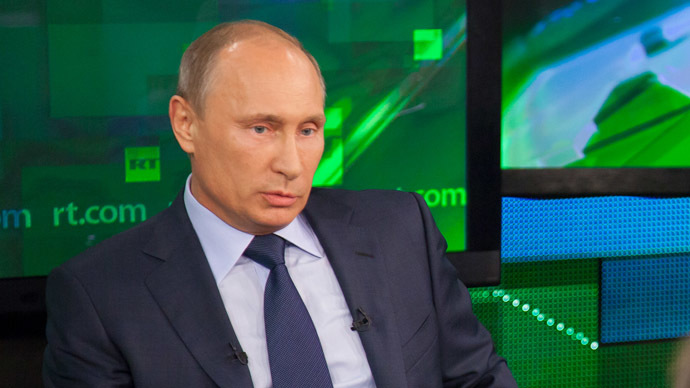
Pic Courtsey-Russia today

(The views expressed are those of the author and do not represent views of CESCUBE.)

Neha Singh Dayma
About Neha Singh Dayma →

Neha Dayma has recently completed her Masters in Politics with Specialization in International Studies from Jawaharlal Nehru University. She is a political science graduate and also a current intern at Online Foreign Policy School. Her areas of interest include South- East Asia, West Asia, geopolitics, Indo- Pacific and India's foreign policy.
ADVERTISEMENT

Related Strategic Analysis