What dictates India’s new stance on treatment of Uighur Muslims?
When we hear the terms "detention camps" or "concentration camps," we unconsciously recall Adolf Hitler, the twentieth-century fascist leader. But now he's gone. However, the phrase is still in use. Because there is one country on our plane...
Several Uyghur and other predominantly Muslim ethnic minority communities' members went missing or vanished in the Xinjiang Region of China in 2017, which first brought the issue of human rights violations and the prevalence of detention camps to the attention of UNHRO and the UN Human Rights Mechanism. Following the establishment of "re-education" camps by the Chinese government, the UN Working Group on Enforced or Involuntary Disappearances reported a "dramatic" rise in cases from Xinjiang in 2018. These revelations then shed light on the issue of Xinjiang's human rights violations.
These accusations are further confirmed by a report that was just published on August 31, 2022 by the UN High Commissioner for Human Rights, titled "The OHCHR Assessment of human rights concerns in the Xinjiang Uyghur Autonomous Region, People's Republic of China." The report emphasizes the seriousness of the human rights abuses that have taken place in the XUAR as a result of the government's use of "counterterrorism and counter-extremism" efforts. The report also claims that China has violated "severe human rights" and may have committed "crimes against humanity" against Uighurs in Xinjiang.
What did the UNHCHR report say about human rights violations in Xinjiang?
As findings of the report are (OHCHR Assessment of human rights concerns in the Xinjiang Uyghur Autonomous Region, People’s Republic of China, 2022)-
· In 1953, Uyghurs made up more than 75% of the region's entire population, but today they only make up roughly 45% of the total population.
· For many years, Uighurs have experienced discrimination in the economic, social, and cultural arenas.
· The Strike Hard campaign launched by China to counter terrorist threats is alarming. The UN acknowledges that effective counterterrorism and violent extremism measures and the defense of human rights are not competing but rather complementary and mutually reinforcing objectives. But in China, things are different. Their efforts have led to several human rights violations.
· China adheres to a system that aims to strike a balance between severe penalties for serious offenses and mercy, leniency, education, and rehabilitation for less serious instances. However, it is unclear what constitutes "severe" and "minor" acts of terrorism and/or "extremist" acts.
· The "anti-terrorism legal system" in China is based on hazy, general principles that provide a variety of officials with significant latitude in how they interpret and use their investigative, preventive, and coercive powers. There are also few constraints and no independent judicial review.
· The widespread referral of people to VETC facilities—Vocational Education and Training Centers—indicates that at least between 2017 and 2019, a sizable portion of the Uyghur and other predominantly Muslim ethnic minority communities in XUAR were subjected to a pattern of large-scale arbitrary detention in VETC facilities. According to the government, all VETC sites are now closed, and all "trainees have graduated," which may imply that these institutions are no longer in service.
· Conditions and treatment in VETC included harsh settings, stringent questioning, protracted isolation, persistent hunger, constant observation, lack of sleep, political teaching, forcible administration of injections and medications, various forms of sexual abuse, and psychological torture.
· In the XUAR, abuses of reproductive rights, forced birth control, stringent implementation of family planning laws after 2017, family divisions, and retaliation were all observed.
· Additionally, the report notes that despite China's participation in and membership in numerous international labor conventions, including the Forced Labor Convention (1930) and the Abolition of Forced Labor Convention (1957), reports of forced or compulsory labor practices against Uyghur and other primarily Muslim minorities both inside and outside of XUAR continue to be reported.
A draft resolution calling for "holding a debate on the situation of human rights in the Xinjiang Uyghur Autonomous Region of China" was taken up by the UN Human Rights Council in light of these revelations and in an effort to hold China accountable for its crimes. A core group of nations, including Canada, Denmark, Finland, Iceland, Norway, Sweden, the United Kingdom, and the United States, sponsored it. A number of other nations, including Turkey, co-sponsored it. Unfortunately, the draft resolution was rejected by the Council after receiving votes of 17 in favor and 19 against.
However, India, which is regarded by the international community as a supporter of human rights, was one of the nations that decided to abstain, which has generated questions as to why India chose to abstain. Why didn't it vote in its favor? Many commentators have stated that India's decision to take this action was motivated by concern over a potential future UN vote on Jammu and Kashmir. They contend that India believes that by supporting debate on the Xinjiang crisis, it will open itself up to international examination of the Kashmir situation, which the Indian government is determined to avoid at all costs, even if it absolves China of responsibility.
However, India has tried to give a justification for its stance. In support of India’s stand, Ministry of External Affairs spokesperson Arindam Bagchi said
"India remains committed to upholding all human rights. India’s vote is in line with its long-held position that country specific resolutions are never helpful. India favours a dialogue to deal with such issues” (Bhattacherjee, 2022).
Although India asserts that its approach is consistent with its policy of not centering on any one country in organizations like the UN Human Rights Council, there have been instances where India has decided to address country-specific issues. For instance, during the most recent meeting, India did not object to the resolutions concerning Ethiopia and Afghanistan. New Delhi voted against Colombo in 2012 and 2013, but it did abstain in the most recent vote on Sri Lanka.
However, it should be noted that this is the first time that India has chosen to publicly confront China on Uyghur human rights violations. For instance, on September 1, Bagchi responded to a question regarding the study by saying, "Our understanding is that the report is about serious maltreatment of minorities in Xinjiang. But this is a UNHRC report, so let the UN comment on it except to note that it is about the serious maltreatment of minorities in Xinjiang” (India takes note of UN report on maltreatment of minorities in China's Xinjiang region, 2022).
And apart from addressing the issue, this time, Bagchi has said, "We have taken note of the OHCHR Assessment of human rights concerns in the Xinjiang Uyghur Autonomous Region, People's Republic of China. The human rights of the people of the Xinjiang Uyghur Autonomous Region should be respected and guaranteed. We hope that the relevant party will address the situation objectively and properly” (Bhattacherjee, 2022). This shows India is not completely ignoring the issue.
References
- Bhattacherjee, K. (2022, October 07). Respect and guarantee human rights to Uighurs of Xinjiang, says India. Retrieved from The Hindu : https://www.thehindu.com/news/national/respect-and-guarantee-human-rights-to-uighurs-of-xinjiang-says-india/article65981954.ece
- India takes note of UN report on maltreatment of minorities in China's Xinjiang region. (2022, September 01). Retrieved from The Economic Times : https://economictimes.indiatimes.com/news/india/india-takes-note-of-un-report-on-maltreatment-of-minorities-in-chinas-xinjiang-region/
- (2022). OHCHR Assessment of human rights concerns in the Xinjiang Uyghur Autonomous Region, People’s Republic of China. UN Human Rights Office of the High Commissioner .
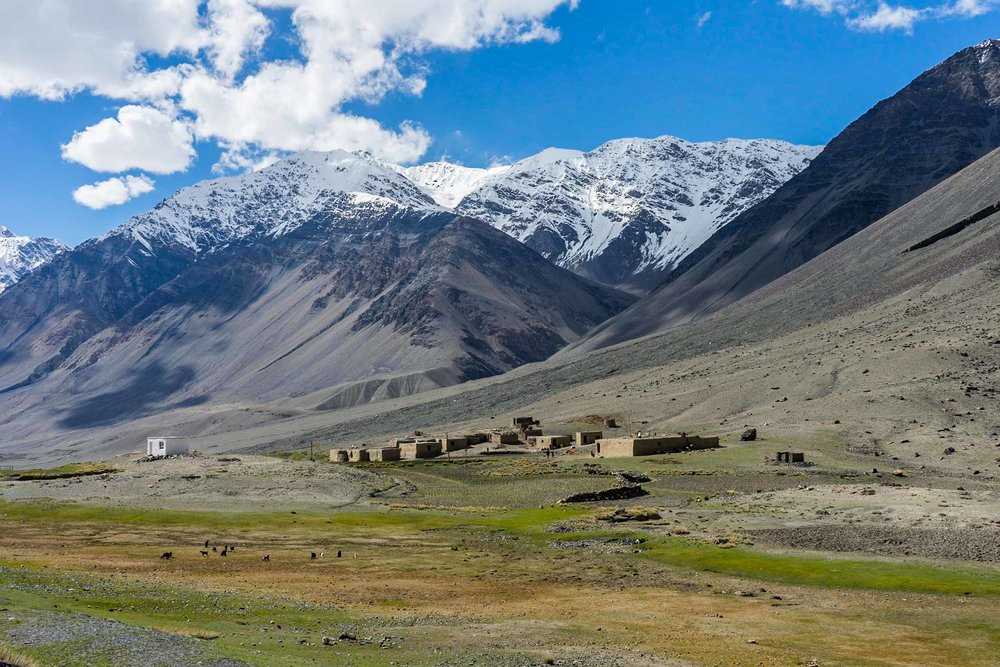
Pic Courtsey-Central Asian website
(The views expressed are those of the author and do not represent views of CESCUBE.)

Neha Dayma has recently completed her Masters in Politics with Specialization in International Studies from Jawaharlal Nehru University. She is a political science graduate and also a current intern at Online Foreign Policy School. Her areas of interest include South- East Asia, West Asia, geopolitics, Indo- Pacific and India's foreign policy.