Xi Jinping call for security chiefs for worst case scenario
In the past decade, China has faced numerous security challenges that have underscored the necessity for robust and comprehensive national security strategies. Both domestic and foreign sources have presented China with increasingly intrica...
Major Takeaways of the Meeting:
As China experiences rapid economic development, geopolitical volatility, and internal challenges, the issue of national security has become increasingly pressing. That is why the policies and programs of China's current leadership center around securing national security. In a recent meeting with security chiefs, President Jinping stressed how the complexity and severity of national security problems faced by China have increased dramatically. Therefore, in order to deal with them, he suggested a few things. Firstly, he said that the national security front must build up strategic self-confidence, have enough confidence to secure victory, and be keenly aware of its own strengths and advantages. He also said that officers must be prepared for worst-case and extreme scenarios, and be ready to withstand the major test of high winds, choppy waters, and even dangerous storms(France-Presse, 2023). He further added that more efforts must be made to modernize China's national security system and capacity and be prepared for actual combat and practical problems. In addition, he added that emphasis must be placed on coordination and efficiency, law-based thinking, science and technology empowerment, and popular support, in order to promote the consistency and integration of work in various sectors.
In this context, one could argue that Xi Jinping's suggestions for dealing with national security problems demonstrate his recognition of the rapidly increasing complexity and severity of such issues faced by China. This is important considering the many challenges that China is currently facing, both externally and internally. Externally, China is in a position of escalating strategic competition with the United States, which could potentially lead to conflict. This can be seen recently too when China declined Washington's request to meet at a security conference in Singapore, citing the need for respect for China's sovereignty and security concerns(Martinez, 2023). China has also accused the US of meddling in Taiwan and demanded that the US cease flying spy planes over the South China Sea. The US has imposed sanctions on Chinese companies, citing security concerns, and the Pentagon has labelled China "the most consequential and systemic challenge" to US national security(Garamone, 2022).
If we further talk about China’s external challenges that one could also cite China’s issues with Taiwan. China's main issue with Taiwan is its claim that the island is part of China's territory and that it should eventually be reunified with the mainland. This has created significant tension between the two countries, and China has frequently warned against any moves towards independence by Taiwan. In recent years, China has increased military pressure on Taiwan and carried out military exercises in the Taiwan Strait. One example of this tension is China's economic pressure on Taiwan. Beijing has sought to isolate Taiwan diplomatically by poaching its diplomatic allies and putting pressure on other countries not to recognize it as a separate nation. Additionally, cross-strait economic relations have been disrupted in recent years due to Beijing's pressure on the island and Taiwanese officials' resistance to Chinese influence in domestic affairs.
Further, China is having a complex relationship with its neighbour India on a range of political, economic, and security issues. One of the biggest issues between the two countries is their border dispute, which has been ongoing since the 1950s. The dispute centres around the region of Ladakh, which is claimed by both India and China. Tensions along the border have been high in recent years, with clashes between troops resulting in casualties on both sides. There are also economic issues between India and China. China has a large trade surplus with India, which has led to concerns among Indian policymakers about the impact of Chinese imports on Indian industry and jobs. India has also been concerned about China's investments in neighbouring countries, which it sees as a way for China to gain strategic influence in the region. China's relationship with Pakistan is also a contentious issue between the two countries. China has been investing heavily in Pakistan's infrastructure, including the development of the China-Pakistan Economic Corridor (CPEC), which runs through Pakistan-occupied Kashmir. India sees this as a way for China to gain a foothold in the region and to encircle India. In addition, China's support for India's regional rival, Pakistan, has increased tensions between the two countries. For example, China has blocked India's attempts to have Pakistan-based militants designated as terrorists by the United Nations(Hindu, 2023).
Another contentiousgeopolitical issue currently facing China is the issue of the south China Sea. China presently claims almost all of the South China Sea, including areas that are internationally recognized as belonging to other countries such as the Philippines, Vietnam, Malaysia, Brunei, and Taiwan. This has led to territorial disputes and tensions between China and these countries. According to the U.S. Energy Information Administration, the South China Sea contains an estimated 11 billion barrels of oil and 190 trillion cubic feet of natural gas in proved and probable reserves(Administration, 2013). As a result, controlling the region is of strategic and economic importance for all countries involved. In 2016, an international tribunal in The Hague ruled that China's claim to sovereignty over much of the South China Sea was invalid under international law(Perlez, 2016). However, China has rejected the ruling and continues to assert its sovereignty over the region. In recent years, China has increased its military presence in the South China Sea, building artificial islands, installing military infrastructure, and conducting military exercises in the area. This has raised concerns among neighbouring countries and the international community, who fear that China's actions could lead to conflict in the region.
Apart from these external challenges, China is currently facing a number of internal challenges. One such challenge is of domestic terrorism. In recent years, there have been several terrorist attacks in the country, primarily targeting public places such as train stations and markets. The Chinese government has responded to these attacks by increasing security measures in vulnerable areas, conducting anti-terrorism operations, and implementing policies aimed at preventing extremist activities.
Another internal security challenge that China is facing is of separatist movements in regions such as Xinjiang, Tibet, and Inner Mongolia(Maizland, 2022). Ethnic and religious minorities in these regions have protested against what they see as political and cultural repression by the Chinese government. The government has responded to these movements with a range of measures, including increased security measures, economic development policies, and political reforms aimed at addressing the grievances of these communities.
Additionally, social unrest has been a growing concern for the Chinese government, particularly around issues such as corruption, income inequality, and human rights abuses. In recent years, there have been protests in various parts of the country, including Hong Kong in 2019, which saw widespread protests against a proposed extradition bill(Davidson, 2019). The government has responded by cracking down on dissent and implementing policies aimed at reducing income inequality and addressing corruption.
So, we can say that, as China intensifies its efforts to improve its national security system, it is crucial for them to understand that their actions, even if defensive, may still trigger a security dilemma for other countries. Therefore, China must make efforts to strengthen confidence-building measures in parallel to their security enhancement. By promoting greater trust and cooperation among nations, we can work towards a safer and more secure world, where national interests can be pursued without compromising the security of others.
References
- Administration, U. E. (2013, February 07). Retrieved from U.S. Energy Information Administration : https://www.eia.gov/international/analysis/regions-of-interest/South_China_Sea
- Davidson, H. (2019, June 10 ). Hong Kong protests: government vows to push ahead with extradition bill. Retrieved from The Guardian : https://www.theguardian.com/world/2019/jun/10/hong-kong-protests-china-state-media-foreign-forces-extradition-bill
- France-Presse, A. (2023, June 01). China’s Xi Jinping calls for greater state control of AI to counter ‘dangerous storms’. Retrieved from The Guardian : https://www.theguardian.com/world/2023/jun/01/chinas-xi-jinping-calls-for-greater-state-control-of-ai-to-counter-dangerous-storms
- Garamone, J. (2022, November 29). China Military Power Report Examines Changes in Beijing's Strategy. Retrieved from U.S. Department of Defense : https://www.defense.gov/News/News-Stories/Article/Article/3230682/china-military-power-report-examines-changes-in-beijings-strategy/#:~:text=The%20report%2C%20released%20today%2C%20calls,in%20its%20ambitions%20and%20intentions.
- Hindu, T. (2023, June 21). India slams China at UN for blocking move to designate 26/11 accused Sajid Mir as 'global terrorist'. Retrieved from The Hindu: https://www.thehindu.com/news/national/india-slams-china-at-un-for-blocking-move-to-designate-2611-accused-sajid-mir-as-global-terrorist/article66993043.ece
- Hong Kong protests: government vows to push ahead with extradition bill. (2019, June 10 ). Retrieved from The Guardian : https://www.theguardian.com/world/2019/jun/10/hong-kong-protests-china-state-media-foreign-forces-extradition-bill
- Maizland, L. (2022, September 22). China’s Repression of Uyghurs in Xinjiang. Retrieved from Council on Foreign Relations : https://www.cfr.org/backgrounder/china-xinjiang-uyghurs-muslims-repression-genocide-human-rights
- Martinez, A. (2023, June 02). U.S. says China has rejected an invitation to meet at summit in Singapore. Retrieved from NPR: https://www.npr.org/2023/06/02/1179612129/u-s-says-china-has-rejected-an-invitation-to-meet-at-summit-in-singapore#:~:text=U.S.%20says%20China%20has%20rejected,at%20summit%20in%20Singapore%20%3A%20NPR&text=Tiny%20Desk-,U.S.%20says%20China%20has%20rejected
- Perlez, J. (2016, July 12). Tribunal Rejects Beijing’s Claims in South China Sea. Retrieved from The New York Times : https://www.nytimes.com/2016/07/13/world/asia/south-china-sea-hague-ruling-philippines.html
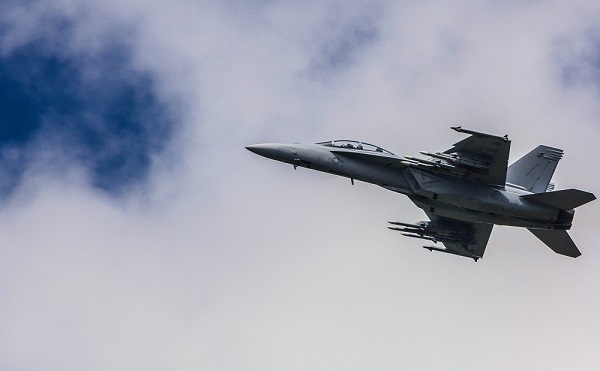
Pic Courtsey-Cibi Chakravarthi at unsplash.com
(The views expressed are those of the author and do not represent views of CESCUBE.)

Neha Dayma has recently completed her Masters in Politics with Specialization in International Studies from Jawaharlal Nehru University. She is a political science graduate and also a current intern at Online Foreign Policy School. Her areas of interest include South- East Asia, West Asia, geopolitics, Indo- Pacific and India's foreign policy.